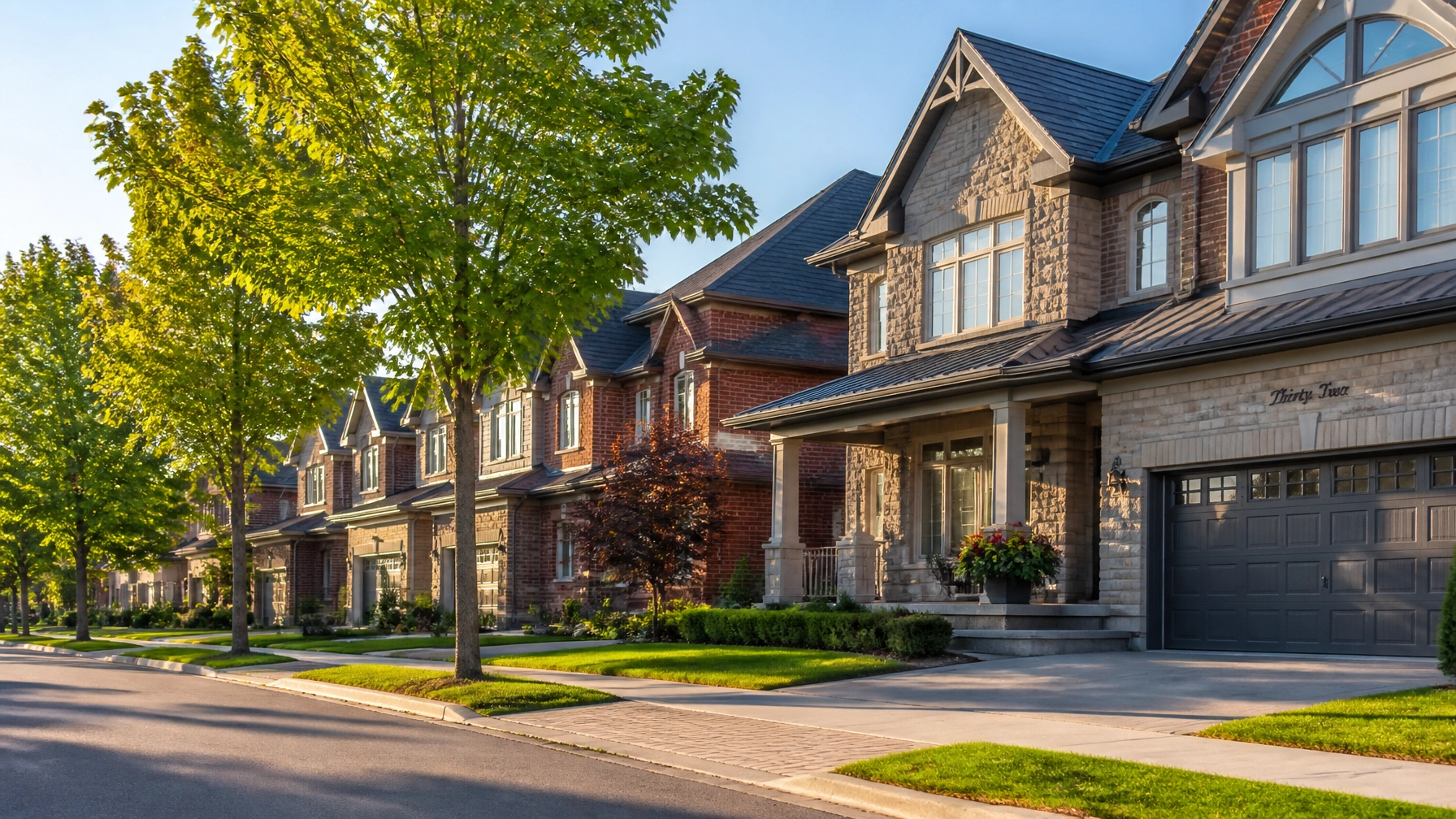
Deciding whether to sign a lease or commit to a mortgage is one of the most significant financial decisions a resident of Ontario will face. In 2026, the landscape of the Greater Toronto Area (GTA) and its surrounding regions: from the high-rises of North York to the burgeoning communities in Simcoe County: has shifted. With market adjustments, updated provincial regulations, and a new era of rental inventory, the "correct" choice is no longer as clear-cut as it was a decade ago.
Cathy Dou, Real Estate Agent and Broker of Record at BuyRealty.ca Brokerage, advises clients to approach this comparison through both quantitative metrics and qualitative community factors. In a market where the benchmark price for a GTA home sits around $936,100, understanding the long-term wealth implications is essential.
The Current State of the Ontario Market (June 2026)
As we enter the summer of 2026, the Ontario real estate market is in a period of calculated adjustment. We are seeing mortgage rates stabilize in the mid-4% range: a significant drop from the peaks of previous years, yet high enough to require a rigorous financial strategy.
While home prices have moderated approximately 15% from the historic highs of 2022, they remain a significant investment. Simultaneously, the rental market has seen an influx of new purpose-built inventory, which has led to a slight easing of rent prices. For instance, the average 1-bedroom condo in the GTA currently leases for approximately $2,150 per month, a four-year low in some pockets.
For many, the question is simple: Should I pay my own mortgage or someone else's? However, the financial reality involves looking at "opportunity costs," "unrecoverable costs," and the power of equity.
The Case for Buying: Building Long-Term Equity
Buying a home in Ontario remains the primary vehicle for generational wealth for most Canadian families. When you purchase a property, a portion of your monthly payment goes toward the principal, effectively acting as a "forced savings account."
1. Appreciation and Stability
Historically, real estate in Southern Ontario: specifically in hubs like Richmond Hill, Markham, and Vaughan: has shown resilient long-term appreciation. While short-term fluctuations occur, owning a freehold property provides a hedge against inflation. For those looking to stay in their home for more than 5 to 7 years, the transaction costs (such as the Ontario Land Transfer Tax) are usually offset by the rise in property value.
2. Control and Customization
Ownership grants you the autonomy to modify your living space. Whether it’s a kitchen remodel or adding a finished basement to increase your home's utility, these improvements directly enhance your quality of life and your property's market value.

The Case for Renting: Flexibility and Cash Flow
In 2026, renting is no longer just a "stepping stone"; for some, it is a strategic financial move.
1. Lower Monthly Outflow
In many parts of the GTA, the cost of renting a three-bedroom townhouse is significantly lower than the all-in cost of owning the same property (mortgage, property taxes, insurance, and maintenance). By renting, an individual can keep their monthly expenses lower and potentially invest the difference in a diversified portfolio (RRSPs or TFSAs).
2. Mobility and Lower Risk
Renting allows for high mobility. If your career takes you from Newmarket to a new opportunity in the United States or another province, you aren't tethered by the need to sell a property in a potentially slow market. Furthermore, as a renter, you are shielded from unexpected "latent defects" or capital expenditures like roof replacements or HVAC failures.
The Financial "Rule of 20" in Ontario
One metric Cathy Dou, Broker of Record at BuyRealty.ca Brokerage, often discusses with clients is the Price-to-Rent Ratio. To calculate this, take the purchase price of a home and divide it by the annual rent of a comparable unit.
- Ratio of 15 or less: Buying is likely the better financial move.
- Ratio of 15 to 20: The decision is neutral and depends on your personal financial goals.
- Ratio of 20 or higher: Renting may be the more fiscally prudent choice in the short term.
In many high-demand Toronto neighbourhoods, the ratio remains above 20, suggesting that unless you have a significant down payment and a long-term horizon, renting while saving could be beneficial. Conversely, in growing areas like Innisfil or Bradford, the ratios often lean more toward ownership.

Navigating the Decision: The Professional Edge
The transition from tenant to owner involves more than just a down payment. It requires a deep understanding of the Trust in Real Estate Services Act (TRESA) and how to navigate an Agreement of Purchase and Sale with precision.
Cathy Dou, as a Broker of Record, emphasizes that buyers today must be more educated than ever. "We are no longer in a market where you can simply 'buy and wait' for a 20% gain in a year," Cathy notes. "Success in 2026 requires a strategic entry point, a clear understanding of how much down payment you actually need, and a professional who can negotiate the best possible terms."
Closing Costs: The Hidden Factor
First-time buyers often overlook the "closing costs." In Ontario, this includes:
- Provincial Land Transfer Tax (and the additional Municipal tax if buying in Toronto).
- Legal Fees (usually ranging from $1,500 to $2,500).
- Title Insurance.
- Adjustments (reimbursing the seller for prepaid taxes or utilities).
For a detailed breakdown of what to avoid during this transition, see our guide on 7 mistakes Ontario first-time home buyers make.

Summary: Which Path is Yours?
The "better" financial future depends on your current "Life Stage" and your "Market Readiness."
- Choose Renting if: You value cash-flow flexibility, have a stay-horizon of less than 4 years, or prefer to keep your capital in liquid investments.
- Choose Buying if: You are seeking stability for your family, have at least a 20% down payment to avoid CMHC insurance, and plan to hold the asset for 7+ years to capitalize on the long-term Toronto housing market forecast.
Real estate isn't just about the transaction; it’s about navigating a complex regulatory environment with absolute integrity. At BuyRealty.ca Brokerage, we take pride in guiding you through this process professionally, explaining all the intricacies involved in securing your home quickly and efficiently.

Whether you are looking to lease a modern condo in the heart of the city or purchase a detached home in the suburbs of York Region, having a steady hand to guide you is paramount.
Call Cathy at 647-691-6364

