
Navigating the Ontario real estate landscape requires more than just a pulse on the local listings; it demands a strategic understanding of the broader economic currents shaping our province. As we move through June 2026, the Greater Toronto Area (GTA) finds itself at a unique crossroads. The "hustle-culture" frenzy of previous years has been replaced by a period of measured stabilization and professional governance.
Cathy Dou, Broker of Record at BuyRealty.ca Brokerage, advises clients to approach this market not with the fear of missing out, but with the precision of a long-term investor. Whether you are looking to downsize in Richmond Hill or secure your first freehold in Markham, understanding the current forecast is the first step toward a successful transaction.
Here are the 10 essential factors you should know about the Toronto and Ontario housing market forecast for the remainder of 2026.
1. The Provincial Stabilization Phase
Across Ontario, the narrative has shifted from "market correction" to "market foundation." Major financial institutions and the Canadian Real Estate Association (CREA) project that while the rest of Canada may see modest gains, Ontario is entering a period of virtually flat price growth for the remainder of 2026. This is not a sign of weakness, but rather a healthy recalibration. For buyers, this provides a rare window of price predictability, allowing for due diligence that was often impossible during the bidding wars of 2022.
2. GTA Inventory: The June Pulse
The latest data from the Toronto Regional Real Estate Board (TRREB) reveals a tightening in inventory. While sales across the GTA rose by approximately 6.3% year-over-year this spring, new listings have actually decreased by nearly 19%. This divergence means that while the market feels calmer, the underlying competition for high-quality properties remains high. In areas like North York and Vaughan, well-maintained homes are still seeing multiple offers, albeit within a more rational price range.
3. The Freehold Driver
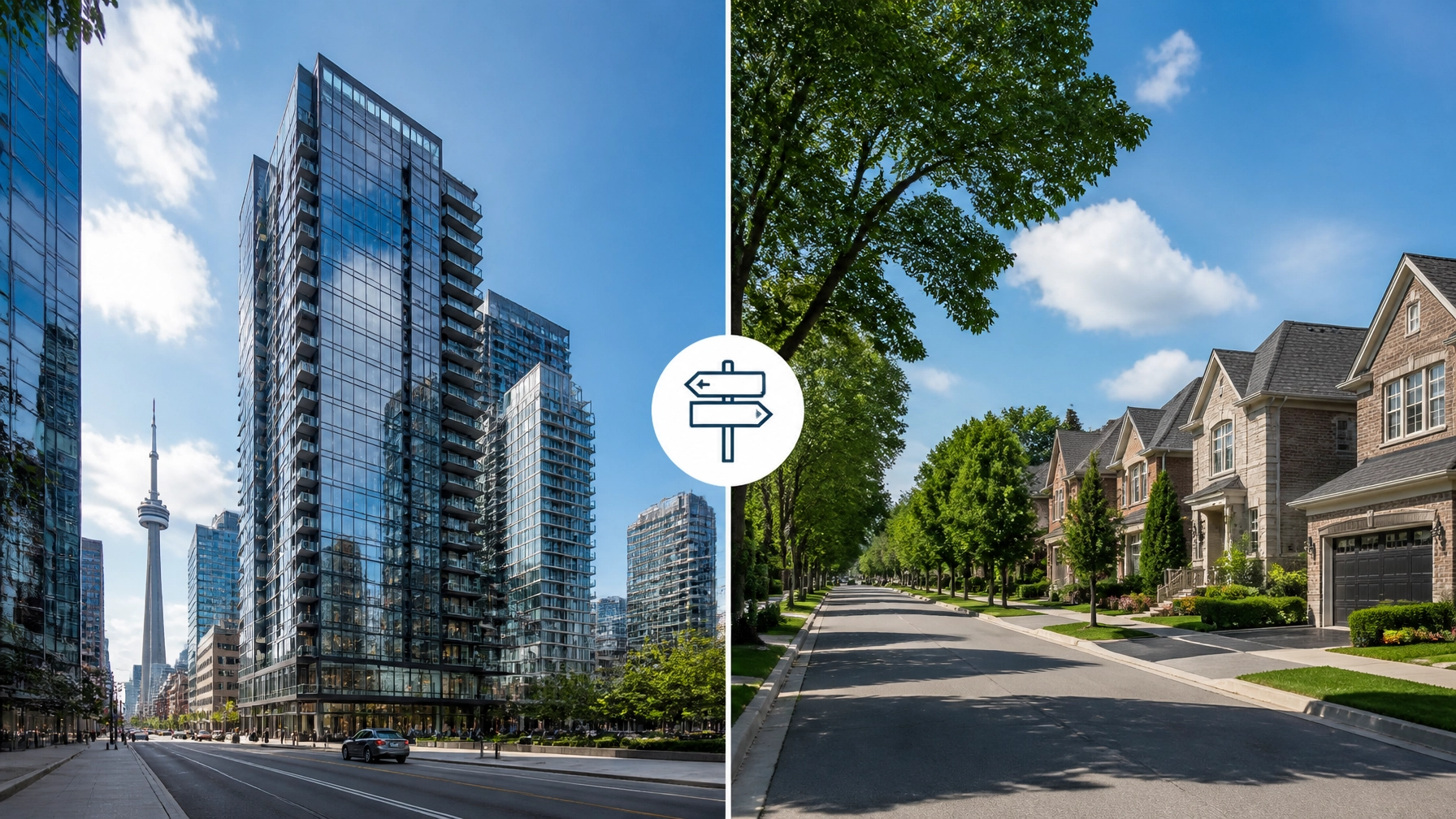
Freehold properties remain the primary engine of the GTA's recovery. Currently making up nearly 60% of all transactions, detached and semi-detached homes in mature neighbourhoods are seeing the most consistent price stabilization. In Markham, for example, detached sales have seen a significant month-over-month uptick, signaling that families are prioritizing land and square footage over the density of the urban core.

4. The Condo Market "Window"
The condo segment, particularly in the 905 region, continues to face the most pressure. With average prices hovering around the $670,000 to $680,000 mark, there is an evident opportunity for first-time buyers. While the 416 (City of Toronto) has seen a surge in condo sales volume: up over 40% year-over-year: prices are still roughly 5% lower than last year. For those following an Ontario first-time home buyer 101 guide, this segment currently offers the most significant negotiating leverage.
5. Interest Rate Reality for June 2026
Stability is the keyword for mortgage rates this summer. As of June 10, 2026, the Bank of Canada has maintained a neutral stance. Well-qualified borrowers in Ontario can currently secure a discounted 5-year fixed mortgage rate in the range of 4.49% to 4.69%. While we are unlikely to see a return to the ultra-low rates of the pandemic era, the current predictability allows for much more accurate long-term financial planning.
6. The Supply Crunch: A Looming Challenge
One of the most critical aspects of the forecast is the decline in new construction. Housing starts in Ontario are projected to hit 20-year lows in 2026, largely due to a slowdown in the pre-construction condo sector. This lack of new supply will eventually put upward pressure on the resale market. Cathy Dou notes that the homes built today will be the inventory of tomorrow; a shortage now ensures that existing freehold properties will remain a premium asset in the years to come.
7. TRESA and Enhanced Protection
The Trust in Real Estate Services Act (TRESA) has fundamentally changed how transactions are handled in Ontario. These regulations emphasize transparency and ethical standards, providing consumers with better information about the services they receive. Working with a brokerage like BuyRealty.ca Brokerage ensures that every step of your transaction: from the Agreement of Purchase and Sale to the final closing: is managed with absolute compliance and fiduciary duty.
8. The "Aging in Place" Trend
A subtle but impactful trend in the 2026 forecast is the decrease in turnover among older homeowners. In neighbourhoods across Thornhill and Aurora, many residents are choosing to use reverse mortgages to renovate and "age in place" rather than downsizing. This further limits the supply of mature, tree-lined suburban homes entering the market, making it essential to have a proactive search strategy.
9. Regional Winners: Markham and Stouffville
Not all markets are moving at the same speed. Markham has seen detached sales increase by 35% month-over-month, showing a strong appetite for the city's tech-hub proximity and school districts. Meanwhile, Stouffville maintains a more balanced state with approximately five months of inventory. Understanding these local nuances is why the Toronto housing market forecast is so vital to your planning.
10. The Importance of Strategic Negotiation
In a market where price growth is flat, the "win" is no longer found in rapid appreciation, but in the purchase price and terms. Negotiating a "latent defect" clause or securing a "subject to sale" condition requires a steady hand. Cathy Dou, Broker of Record, leverages years of experience to ensure her clients aren't just buying a house, but securing a protected financial asset.

Conclusion: Moving Forward with Confidence
The 2026 Ontario market is one of precision. It rewards the patient, the informed, and the well-advised. While headlines may focus on national averages, the real story is found in the specific streets of the GTA: from the modern developments in Innisfil to the established corridors of North York.
Real estate in Ontario isn't just about the transaction; it’s about navigating a complex regulatory environment with absolute integrity. At BuyRealty.ca, we pride ourselves on providing more than just a listing: we provide a strategic path to homeownership.
If you are ready to explore how these market shifts affect your specific goals, we are here to provide the clarity you need.
Call Cathy at 647-691-6364

