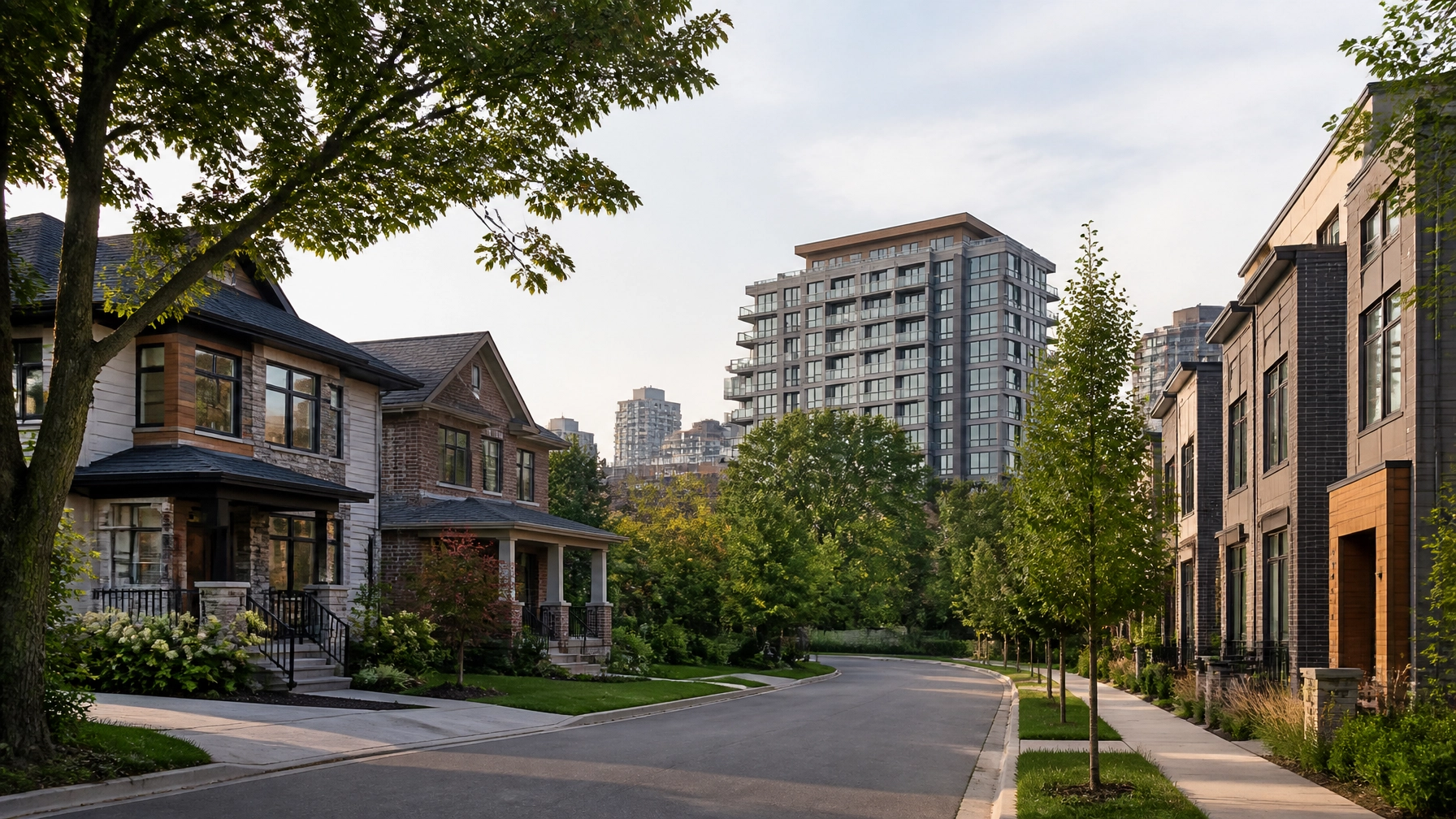
Article published under the Articles section by BuyRealty.ca Brokerage. Market information is based on July 2026 resale data available as of August 9, 2026.
The Greater Toronto Area housing market is sending a mixed but important signal in August 2026. Prices remain below last year’s levels, yet the supply of new homes coming to market has contracted much more sharply than sales.
That combination is creating tighter conditions for buyers in several GTA communities, including Vaughan, Willowdale, and North York. Buyers may still have negotiating opportunities, but the market is no longer defined simply by abundant choice and broad price reductions.
The current environment calls for preparation, local analysis, and careful attention to property type.
The July GTA numbers: fewer listings, steady demand, lower prices
According to July 2026 figures reported through the Toronto Regional Real Estate Board market, the GTA recorded:
- 5,995 home sales, down 0.9% year over year
- 14,484 new listings, down 17.8% year over year
- An average selling price of $1,003,956, down 4.5% year over year
The sales decline was modest compared with the drop in new listings. In practical terms, buyers had fewer new properties to consider, while the number of completed transactions remained relatively stable.
That is the foundation of the market tightening now being discussed in August.
The average selling price also requires context. It is a broad GTA measure covering different municipalities, housing types, and price segments. It should not be treated as a precise valuation for a detached home in Vaughan, a condominium near Yonge and Sheppard, or a townhome in North York.
Still, the direction of the data matters. Prices are softer than a year ago, but shrinking supply may limit how much further sellers are willing to reduce prices: particularly for well-located, properly maintained properties.
For additional context, readers can review this 2026 Toronto housing market forecast from BuyRealty.ca Brokerage.
What tighter conditions mean for buyers
A tightening market does not automatically mean that prices will rise immediately. It means the balance between available supply and buyer demand is changing.
Buyers may notice:
-
Fewer fresh choices each week.
A 17.8% annual decline in new listings means that desirable homes may attract attention more quickly, especially when they are realistically priced. -
More competition for turnkey properties.
Homes requiring limited immediate work can stand out when buyers have fewer alternatives. This is particularly relevant for families comparing detached homes and townhomes. -
Less room for broad, automatic discounts.
A softer average price does not mean every seller is equally motivated. A property with a strong location, functional layout, and sound maintenance history may not trade at the same discount as an overpriced or poorly presented listing. -
Greater value in being financially prepared.
Buyers with a mortgage pre-approval, a defined budget, and a clear list of acceptable conditions can act more decisively without abandoning due diligence.
The market still rewards discipline. A buyer should not waive financing or inspection protections simply because inventory is tightening. The appropriate terms depend on the property, the buyer’s circumstances, and the advice of the professionals involved.
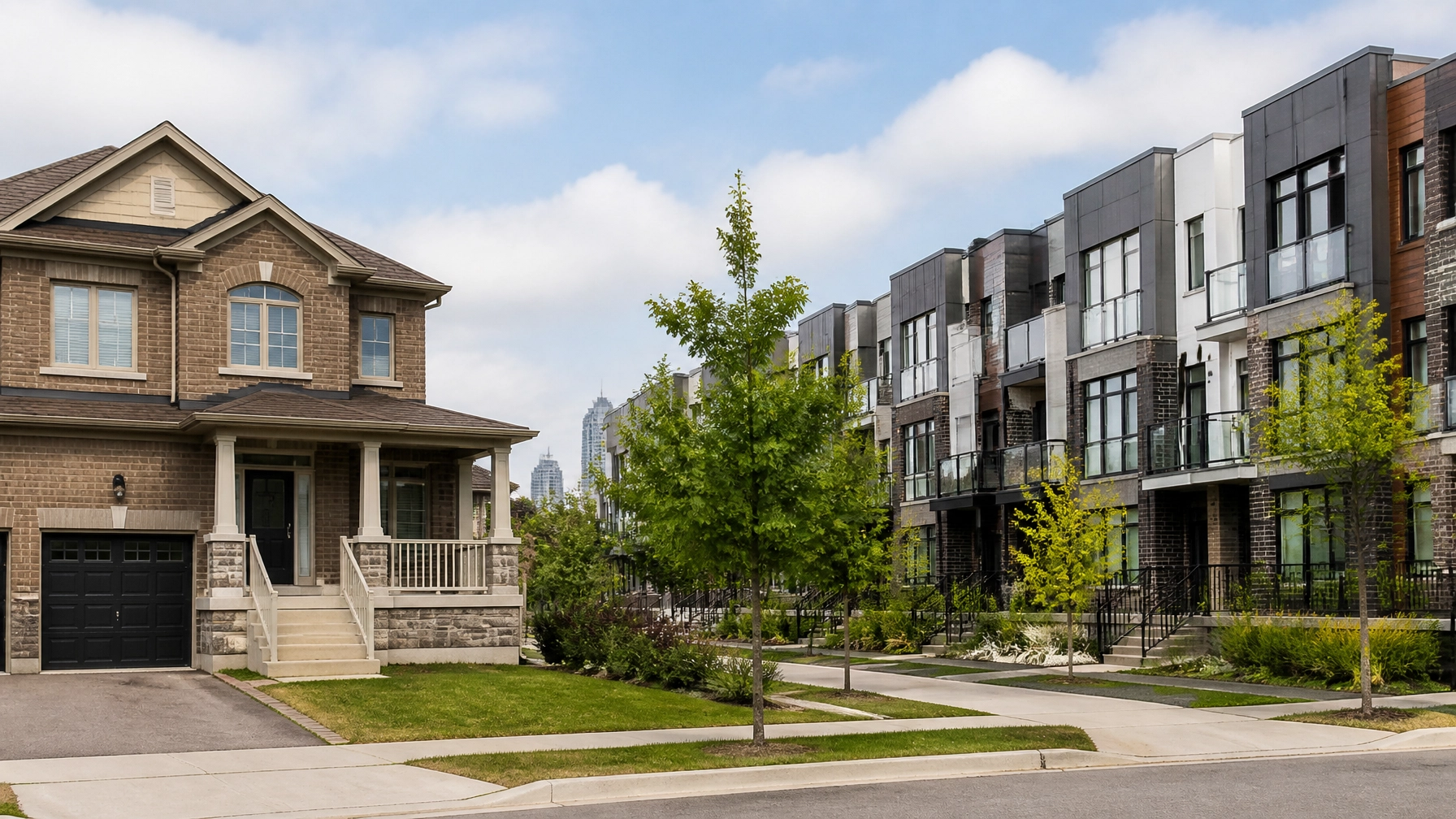
Mortgage rates as of August 9, 2026
Mortgage rates are one of the factors influencing purchasing power this summer. As of August 9, 2026, widely reported best-market rates are approximately:
- Best five-year fixed: about 4.04%
- Best five-year variable: approximately 3.40% to 3.55%
These are headline rates, not guaranteed offers. The rate available to an individual borrower can vary according to credit history, income, down payment, property type, loan-to-value ratio, mortgage insurance, lender policy, and whether the property is owner-occupied.
Comparison sources such as Ratehub and WOWA provide current rate information, but a borrower should confirm the actual rate, term, penalty structure, and qualification requirements before making an offer.
The key lesson is that a lower rate does not make an unaffordable home affordable. Buyers should assess the full cost of ownership, including property taxes, insurance, utilities, maintenance, condominium fees where applicable, and closing costs.
A useful budgeting framework is outlined in this Ontario down payment guide.
Vaughan: more choice than the peak years, but quality still matters
Vaughan continues to attract families seeking more interior space, newer housing stock, and access to major roads, transit, schools, shopping, and employment centres.
The local market includes established detached neighbourhoods, newer subdivisions, freehold townhomes, condominium townhomes, and high-rise developments. These segments do not necessarily move together.
For a buyer considering Vaughan, the most important questions include:
- Is the home freehold or subject to a condominium corporation?
- Are there monthly maintenance fees or shared road obligations?
- How old are the roof, windows, HVAC systems, and major mechanical components?
- Is the lot affected by drainage, grading, easements, or future development?
- Does the layout meet the family’s needs without relying on costly renovations?
- How does the property compare with recent sales of similar homes nearby?
Detached homes may offer more privacy, yard space, and long-term flexibility, but they typically require a larger purchase budget and more responsibility for maintenance. Townhomes may offer a more accessible entry point, but buyers must understand the ownership structure and any associated fees.
The current market may be more favourable for move-up buyers than the highly competitive conditions seen earlier in the decade. However, “more favourable” should not be confused with universally inexpensive. The right comparison is between the total cost and long-term suitability of each property: not simply the list price.
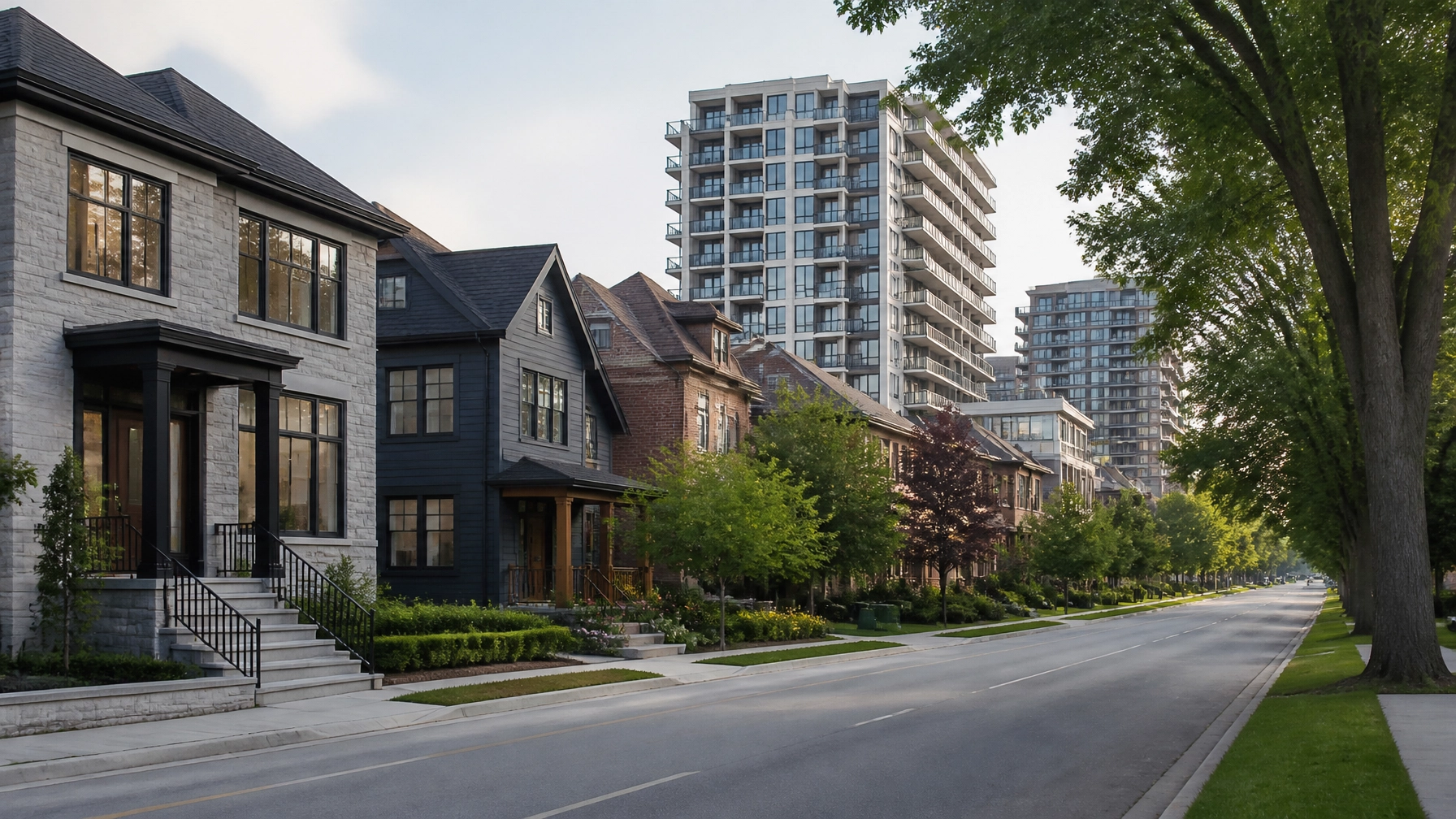
Willowdale and North York: transit, housing type, and micro-market differences
Willowdale and North York offer a particularly broad mix of housing. Buyers may be comparing a condominium near Yonge Street with a detached home on a quiet residential street only a short distance away.
That diversity makes neighbourhood-level research essential.
Willowdale buyers often weigh:
- Access to TTC Line 1 and nearby transit connections
- Proximity to schools, parks, libraries, and community facilities
- The difference between Willowdale East and Willowdale West housing stock
- Condominium maintenance fees and reserve fund strength
- Renovation potential and zoning considerations for low-rise homes
- Commute times to downtown Toronto, York Region, and major highways
In North York, a property’s value can be strongly influenced by its relationship to transit, ravines, arterial roads, school boundaries, and commercial corridors. Two homes with similar square footage may appeal to very different buyers because one offers a quieter setting while the other provides more immediate access to transit and services.
Buyers researching the area can explore this guide to North York neighbourhoods for families. It discusses communities such as Willowdale, Lansing, Don Mills, Bayview Village, and York Mills, while emphasizing the importance of matching neighbourhood characteristics to a household’s priorities.
Beyond Vaughan and North York: the GTA remains highly localized
The same market conditions can produce different outcomes across the broader GTA.
In Toronto’s urban condo market, buyers should examine the individual building as carefully as the neighbourhood. Maintenance fees, reserve fund planning, insurance costs, litigation, special assessments, and the building’s recent resale history can materially affect value.
In Richmond Hill, Markham, Aurora, Newmarket, and Bradford, buyers may find different balances between detached homes, townhomes, semi-detached properties, and newer developments. Innisfil and other communities north of Toronto may offer different space and lifestyle considerations, but commuting costs, services, infrastructure, and future development should be part of the analysis.
Ontario real estate is not one market. It is a collection of municipal and neighbourhood-level markets shaped by housing supply, employment, transit, zoning, demographics, and buyer preferences.
A practical August strategy for buyers
For buyers entering the market now, a measured process is more valuable than trying to predict the exact bottom.
A sound approach includes:
- Obtain a current mortgage pre-approval. Confirm the rate, expiry date, payment, and qualification assumptions.
- Set an all-in budget. Include the down payment, land transfer tax, legal fees, inspection, insurance, moving costs, and immediate repairs.
- Choose the housing type before negotiating. A detached home, freehold townhome, condominium townhome, and apartment condominium carry different costs and responsibilities.
- Study comparable sales. List prices are not a substitute for recent completed transactions.
- Review the property carefully. Where appropriate, investigate latent defects, permits, renovations, condominium documents, and inspection findings.
- Understand representation and the Agreement of Purchase and Sale. Under the Trust in Real Estate Services Act, professional conduct, disclosures, and documentation are important parts of a compliant transaction.
- Avoid decisions based solely on fear of missing out. A tighter market requires preparation, not panic.
Cathy Dou, Broker of Record at BuyRealty.ca Brokerage, advises buyers to compare both quantitative metrics and qualitative factors: price, financing, and recent sales alongside location, layout, maintenance, transit, and long-term suitability.
The bottom line
The GTA housing market is tightening in August 2026 because new listings have fallen much faster than sales. Prices remain 4.5% below July 2025, but reduced supply may give well-positioned sellers more stability and make desirable homes more competitive.
For buyers in Vaughan, Willowdale, and North York, this is a market that rewards readiness. There may still be opportunities to negotiate, particularly where a property is overpriced or requires work. At the same time, buyers should expect stronger competition for homes that are well located, appropriately priced, and ready for occupancy.
Real estate in Ontario is not only about timing the market. It is about understanding the property, the neighbourhood, the financing, and the regulatory obligations before committing to an Agreement of Purchase and Sale.
Call Cathy at 647-691-6364
Market figures and mortgage-rate information are time-sensitive. Confirm current data, lender terms, and property-specific details before making a financial decision.
| Vaughan | Detached houses · Condos · Townhouses · New this week |
|---|---|
| Toronto | Detached houses · Condos · Townhouses · New this week |

