
Stepping into the Ontario real estate market for the first time is a significant milestone that marks a new chapter in your life. Whether you are looking for a sleek condo in the heart of North York or a spacious family home in a quiet Vaughan neighbourhood, the journey to homeownership requires a blend of financial readiness, local knowledge, and professional guidance.
As we navigate the market in May 2026, stability has become the keyword. While the frenetic pace of previous years has balanced out, the demand for quality housing in the Greater Toronto Area (GTA) remains robust. For first-time buyers, this provides a more predictable environment to make one of the most important investments of their lives. At BuyRealty.ca, we believe that an educated buyer is a successful buyer. This guide is designed to walk you through the provincial landscape and help you secure your piece of Ontario.
The Big Picture: The Ontario Market in 2026
The Ontario real estate market is diverse, ranging from the high-density urban centres managed by the Toronto Regional Real Estate Board (TRREB) to the sprawling suburban communities and rural retreats across the province. For most first-time buyers, the focus remains on the "Golden Horseshoe": specifically areas like Toronto, Vaughan, Markham, and Richmond Hill.
Cathy Dou, Broker of Record at BuyRealty.ca Brokerage, advises clients to look beyond just the purchase price. In today's market, housing stability is supported by steady immigration, a strong labour market, and a shift toward more sustainable urban planning. When you buy in communities like Willowdale or Thornhill, you aren't just buying four walls; you are investing in a lifestyle supported by world-class infrastructure and community services.
Understanding Local Nuances
Each neighbourhood has its own pulse. In Vaughan, for instance, the expansion of transit and the development of the Vaughan Metropolitan Centre have made it a hotspot for young professionals and families alike. Meanwhile, North York continues to offer a perfect balance of metropolitan amenities and quiet residential pockets. Understanding these local market trends is essential for making a factually correct and strategic offer.

Step 1: Financial Foundation and the Down Payment
Before you visit your first open house, you must have your finances in order. In Ontario, the minimum down payment depends on the purchase price of the home:
- $500,000 or less: 5% of the purchase price.
- $500,001 to $999,999: 5% on the first $500,000 and 10% on the portion above $500,000.
- $1 million or more: A flat 20% down payment is required.
Given the average prices in the GTA, many first-time buyers should aim for a substantial savings goal. However, don't forget the "hidden" costs. You should budget an additional 1.5% to 4% of the purchase price for closing costs, which include legal fees, home inspections, and the Ontario Land Transfer Tax.
The Importance of Pre-Approval
A mortgage pre-approval is your most powerful tool in a negotiation. It confirms your budget and shows sellers that you are a serious, qualified buyer. In 2026, lenders are looking for stability in employment and a healthy credit score. Cathy Dou emphasizes that securing a rate hold can protect you from any minor market fluctuations while you search for the perfect property.
Step 2: Leveraging Government Incentives
The Canadian government and the Province of Ontario offer several programs specifically designed to help first-time buyers cross the threshold into homeownership.
- The First Home Savings Account (FHSA): This is a game-changer. It allows you to save up to $8,000 per year (up to a $40,000 lifetime limit) for your first home. Contributions are tax-deductible, and withdrawals to buy a home are tax-free.
- Home Buyers' Plan (HBP): You can withdraw a significant amount from your Registered Retirement Savings Plan (RRSP) to use toward your down payment, provided the funds are repaid over a 15-year period.
- Land Transfer Tax Rebates: First-time buyers in Ontario can receive a rebate of up to $4,000 on the provincial land transfer tax. If you are buying in the City of Toronto, there is an additional municipal rebate available, potentially saving you thousands of dollars at closing.
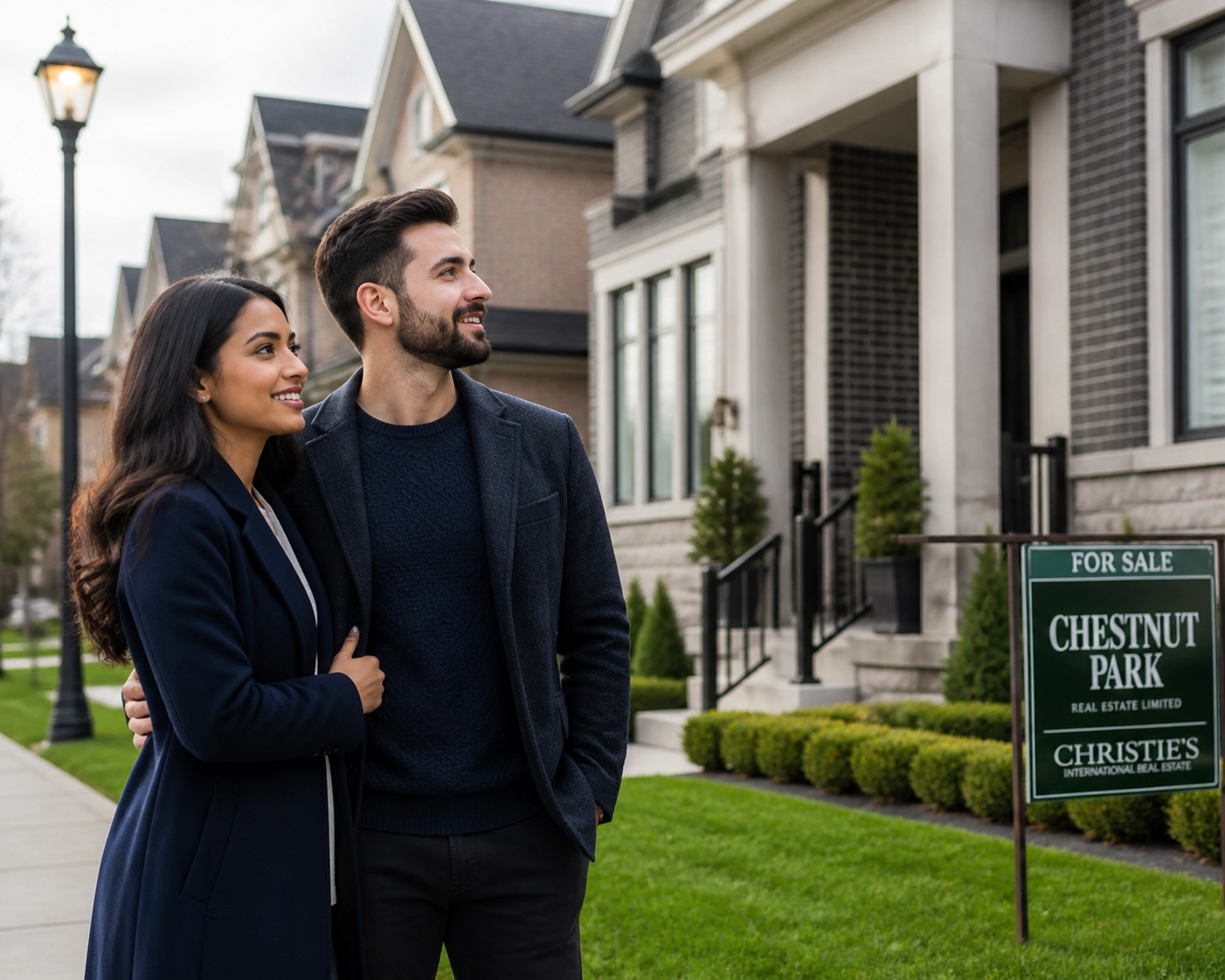
Caption: A young family exploring a new neighbourhood in Vaughan, envisioning their future home.
Step 3: Defining Your Lifestyle and Community
Buying a home is as much about the "where" as it is about the "what." For families, proximity to top-rated schools in areas like Richmond Hill or Markham is often the priority. For others, the commute to downtown Toronto from a transit-oriented hub in North York is the deciding factor.
When evaluating a community, consider:
- Amenities: Are there parks, community centres, and grocery stores nearby?
- Future Development: Check municipal zoning plans. A new transit line or community centre can significantly boost property values.
- Stability: Established neighbourhoods like Willowdale offer long-term value and a sense of belonging.
To explore more about specific neighbourhood trends, you can visit Cathy Dou's local insights for detailed community profiles.
Step 4: The Search and Professional Guidance
In Ontario, the real estate process is governed by the Trust in Real Estate Services Act (TRESA). This legislation ensures transparency and ethical conduct throughout your transaction. Working with a dedicated professional is not just a luxury; it is a safeguard for your investment.
Cathy Dou, Broker of Record, provides a protected and strategic path to homeownership. Her role involves more than just showing properties; it includes:
- Navigating TRESA Regulations: Ensuring you understand your rights as a client.
- Due Diligence: Investigating the history of a property and identifying potential "Latent Defects" that might not be visible to the untrained eye.
- Strategic Negotiation: Crafting an Agreement of Purchase and Sale that protects your interests with appropriate conditions, such as financing and home inspection.

Step 5: Making the Offer and Closing the Deal
Once you find "the one," your Real Estate Agent will help you draft an offer. In a stable market, you often have the opportunity to include conditions. A home inspection is highly recommended, whether the house is a historic century home or a newer build in Innisfil or Bradford. A professional inspector will check the "bones" of the house: the roof, plumbing, electrical, and foundation: to ensure there are no expensive surprises after you move in.
The Closing Process
After your offer is accepted and conditions are met, the "firm" deal moves to the closing phase. This typically takes 30 to 90 days. During this time, your lawyer will perform a title search to ensure there are no liens on the property and that the seller has the legal right to sell it. You will also need to secure home insurance, which is a requirement for your mortgage.
On closing day, your lawyer handles the transfer of funds and the registration of the deed. Once the keys are in your hand, you are officially an Ontario homeowner!
Expert Insight: Why Buy Now?
Real estate in Ontario isn't just about the transaction; it’s about navigating a complex regulatory environment with absolute integrity. Cathy Dou, Real Estate Agent and Broker of Record at BuyRealty.ca Brokerage, advises clients to approach this comparison through both quantitative metrics and qualitative community factors.
"In a shifting market, clarity is the greatest asset we can offer our clients," says Cathy. "Whether you are looking at a freehold townhouse or a luxury condo, the goal is to ensure you are making a decision that aligns with your long-term financial health and your family's lifestyle needs."
For more resources on the current market state and buyer checklists, visit the Buyer Resources page.

Final Thoughts for the First-Time Buyer
The journey to owning your first home in Ontario is a marathon, not a sprint. By building a strong financial base, taking advantage of government incentives, and partnering with an experienced Broker of Record, you can navigate the complexities of the GTA market with ease.
From the vibrant streets of Toronto to the family-friendly cul-de-sacs of Aurora and Newmarket, your perfect home is out there. Stay informed, stay patient, and trust the process.
Call Cathy at 647-691-6364 to begin your journey toward homeownership today. Whether you have questions about the latest RECO regulations or want to start touring homes in North York, we are here to provide the expert guidance you deserve.
| Toronto | Detached houses · Condos · Townhouses · New this week |
|---|---|
| Vaughan | Detached houses · Condos · Townhouses · New this week |


