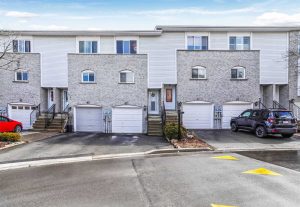
The Greater Toronto Area housing market has entered a distinct phase in 2026: one that's fundamentally different from the frenetic bidding wars and soaring prices of recent years. For Ontario first time home buyers, understanding these shifts isn't just helpful; it's essential for making strategic, protected decisions in today's environment.
Cathy Dou, Real Estate Agent and Broker of Record at BuyRealty.ca Brokerage emphasizes that 2026 represents a pivotal opportunity for first-time buyers who approach the market with clear-eyed analysis rather than emotional urgency. "We're seeing market conditions that favor prepared buyers who understand both the opportunities and the persistent challenges," she notes. Call Cathy at 905-367-5924.
Let's examine the seven critical trends shaping the Toronto housing market forecast for 2026.
1. Price Corrections Accelerating Across the GTA
The numbers tell a straightforward story: the Greater Toronto Area's benchmark home price dropped to $936,100 in January 2026, representing an 8.0% year-over-year decline. Average sold prices fell 6.5% to $973,289 during the same period: marking five-year lows across multiple property categories.
Industry forecasts anticipate year-over-year price declines in the mid to high single digits persisting through the first half of 2026, with potential stabilization toward year-end. For Ontario first time home buyers who've watched prices climb beyond reach in previous cycles, this correction creates tangible entry opportunities.
However, Cathy Dou, Real Estate Agent and Broker of Record at BuyRealty.ca Brokerage cautions that declining prices alone don't guarantee affordability. "Strategic buyers are focusing on neighborhoods with strong fundamentals: transit access, employment centers, and community infrastructure: rather than simply chasing the lowest prices," she advises.

2. Buyer's Market Dynamics Creating Negotiating Power
With 5.8 months of housing supply recorded in January 2026, the Toronto housing market has decisively shifted into buyer's market territory. This metric: representing how long it would take to sell all available inventory at the current sales pace: sits well above the 4-month threshold that typically defines balanced conditions.
For first-time buyers navigating their first Agreement of Purchase and Sale, this extended inventory period translates to genuine negotiating leverage. Sales are declining faster than new listings, indicating weakening demand relative to supply.
Practically, this means Ontario first time home buyers can:
- Conduct thorough home inspections without pressure
- Negotiate price reductions or seller concessions
- Include reasonable conditions in offers
- Avoid competing against multiple bidders on most properties
BuyRealty.ca Brokerage recommends buyers use this environment to ensure complete due diligence rather than rushing transactions. The Trust in Real Estate Services Act (TRESA) mandates specific disclosure requirements, and buyers should leverage professional representation to navigate these regulatory protections fully.
3. Transaction Volume Weakening Despite Favorable Conditions
The GTA recorded just 3,082 sales in January 2026: a 19.9% year-over-year decline. This persistent weakness in transaction volume presents a paradox: prices are lower, buyer conditions are favorable, yet sales activity remains suppressed.
The Toronto Real Estate Board forecasts 60,000 to 70,000 sales for 2026, but skepticism exists about achieving these targets given weakening employment indicators and deteriorating consumer confidence across Ontario.
For Ontario first time home buyers, reduced competition means less pressure, but it also signals broader economic uncertainty that warrants cautious financial planning. Cathy Dou, Real Estate Agent and Broker of Record at BuyRealty.ca Brokerage advises clients to maintain employment stability and conservative debt-to-income ratios when entering the market during periods of economic transition.

4. Condo Market Facing Structural Headwinds
Condominium sales plummeted 26% year-over-year in January 2026, representing the most challenged segment of the Toronto housing market. The affordable segment: traditionally positioned as the entry point for first-time buyers: has struggled particularly as pandemic-era investor demand evaporated.
This trend requires Ontario first time home buyers to carefully evaluate whether condominiums represent appropriate entry points in 2026. Factors to scrutinize include:
- Reserve fund adequacy: Aging buildings with deferred maintenance present latent defect risks
- Special assessment likelihood: Underfunded reserve funds may trigger unexpected costs
- Rental supply dynamics: Investor exodus has flooded rental markets, potentially affecting resale demand
- Maintenance fee trajectories: Rising operating costs are being passed to unit owners
While condos remain more accessible price-wise, BuyRealty.ca Brokerage emphasizes comprehensive status certificate review and long-term holding strategy before committing to condominium purchases in the current environment.
5. Affordability Challenges Persisting Despite Price Reductions
Here's the uncomfortable reality: while Toronto housing prices have declined, affordability barriers remain firmly entrenched for many Ontario first time home buyers. The fundamental issue isn't solely price: it's the gap between household incomes and housing costs.
Bank of Canada rate cuts throughout 2024 and 2025 improved borrowing conditions, reducing monthly carrying costs for mortgage holders. However, this monetary policy adjustment hasn't resolved the structural income-to-price mismatch that defines the Greater Toronto Area housing market.
According to mortgage stress test requirements, buyers must qualify at rates approximately 200 basis points above contract rates. Even with declining prices, many first-time buyers find qualifying income thresholds remain prohibitive.

Cathy Dou, Real Estate Agent and Broker of Record at BuyRealty.ca Brokerage recommends Ontario first time home buyers focus on three strategic approaches:
- Geographic flexibility: Exploring emerging neighborhoods or adjacent municipalities where price-to-income ratios remain manageable
- Property type optimization: Considering townhouses or semi-detached properties that offer freehold ownership without detached premiums
- Household income strategies: Maximizing combined borrowing capacity through co-ownership or guarantor arrangements where appropriate
6. Interest Rate Environment Stabilizing
Current forecasts anticipate one additional 25-basis-point rate reduction in 2026, followed by sustained stability. This represents a significant shift from the aggressive rate hiking cycle that characterized 2022-2023 and the subsequent cutting phase of 2024-2025.
For Ontario first time home buyers, rate stabilization provides several strategic advantages:
- Predictability: Stable rates enable accurate long-term budgeting and financial planning
- Lock-in opportunities: Fixed-rate mortgages become more attractive when rates are expected to remain steady
- Competitive lending: Financial institutions competing for mortgage business in a slower market may offer favorable terms
However, buyers shouldn't expect significant further rate declines. The era of emergency-level low rates appears definitively concluded, and BuyRealty.ca Brokerage advises clients to structure their housing budgets around current rate realities rather than speculating on future decreases.
7. New Construction Supply Constraints Emerging
New construction activity is projected to decline throughout 2026-2028, falling well below the historical ten-year average. Developers face multiple headwinds: elevated construction costs, municipal approval delays, and reduced pre-sale demand.
This supply constraint creates a complex dynamic for the Toronto housing market forecast. While immediate inventory appears adequate (recall the 5.8 months of supply), medium-term supply limitations may eventually tighten markets: particularly for newer, turnkey properties that first-time buyers often prefer.
Ontario first time home buyers considering new construction should understand:
- Completion timelines: Extended delays remain common; occupancy dates should be viewed as estimates
- Tarion warranty coverage: New homes come with statutory warranties, but buyers must understand limitation periods and coverage exclusions
- Development risk: Particularly with pre-construction purchases, buyers assume project completion risk
Cathy Dou, Real Estate Agent and Broker of Record at BuyRealty.ca Brokerage recommends thorough developer due diligence and legal representation specializing in new construction transactions.
Strategic Positioning for Ontario First Time Home Buyers in 2026
The Toronto housing market forecast for 2026 presents genuine opportunities tempered by persistent challenges. Lower entry prices and reduced competition create favorable conditions, but economic uncertainty and structural affordability issues require careful navigation.
BuyRealty.ca Brokerage emphasizes that successful first-time buyers in this environment share common characteristics: they maintain realistic expectations, conduct comprehensive due diligence, secure pre-approved financing with conservative assumptions, and work with licensed professionals who prioritize their long-term interests.
Real estate in Ontario operates within a complex regulatory framework designed to protect consumers. The Real Estate Council of Ontario (RECO) enforces professional standards, and TRESA mandates specific disclosure and representation requirements. First-time buyers benefit enormously from professional representation that ensures compliance while advancing their strategic interests.
For Ontario first time home buyers ready to navigate the 2026 market, Call Cathy at 905-367-5924.
This analysis reflects market conditions and forecast information available as of February 2026. Real estate markets involve inherent uncertainties, and past performance does not guarantee future results. Buyers should conduct independent due diligence and consult with licensed professionals before making real estate decisions.
BuyRealty.ca Brokerage | Call Cathy at 905-367-5924