
As we navigate through June 2026, the Ontario real estate landscape has reached a significant point of maturity. For investors and families looking to anchor their capital in the Greater Toronto Area (GTA), the choice between the historic density of Toronto and the evolving skyline of Mississauga has never been more nuanced. The rapid-fire appreciation of the early 2020s has given way to a market defined by precision, strategy, and a deep understanding of provincial regulations.
Cathy Dou, Real Estate Agent and Broker of Record at BuyRealty.ca Brokerage, observes that the current environment rewards the disciplined investor. With the Bank of Canada holding the policy rate steady at 2.75%, the "wait-and-see" era has transitioned into a "calculate-and-commit" phase. In this climate, Cathy Dou advises clients to approach the Toronto versus Mississauga comparison through both quantitative metrics: such as rental yields and vacancy rates: and the qualitative shifts in community stability.
The Ontario Macro-View: A Market in Calibration
Before drilling down into local postal codes, it is essential to understand the broader provincial context. Ontario remains Canada’s economic engine, but the housing market is currently in a state of calibration. According to recent data from the Toronto Regional Real Estate Board (TRREB), aggregate prices across the GTA have seen a moderate year-over-year adjustment of approximately 6.9%.
While this softening has been felt across the board, it has created a unique "buyer-friendly" window that has not been seen in a decade. However, this is not a uniform correction. The divergence between the "Big Two": Toronto and Mississauga: requires a sophisticated eye to identify where the true value lies in the 2026-2027 fiscal cycle.

Toronto: The Core of Density and Resilience
Toronto remains the primary target for institutional capital and long-term holds. However, the 2026 forecast for the city core is one of selective performance. The condo segment, in particular, has faced headwinds due to high inventory levels and a shift in tenant preferences toward more spacious living arrangements.
The Condo Correction
In the downtown core, we are seeing a "flight to quality." Generic glass towers are seeing slower appreciation, while boutique buildings and those with larger, family-sized units (1,000+ square feet) are maintaining their value. Investors who focused on high-density micro-condos are finding that the rental market is saturated, leading to more competitive pricing and the need for higher-end finishes to attract stable tenants.
The Freehold Factor
Conversely, the Toronto freehold market: specifically semi-detached and detached homes in neighbourhoods like North York and East York: continues to show structural resilience. The supply of land in the city is finite, and despite the province’s efforts to increase density through the Planning Act changes, the demand for a traditional backyard and a detached garage remains high.
For those looking at long-term capital appreciation, Cathy Dou suggests that Toronto’s established infrastructure and global status provide a safety net that is difficult to replicate elsewhere. Understanding why the Toronto housing market forecast will change the way you plan your next move is critical for those eyeing the downtown core.
Mississauga: The Rise of a Sophisticated Alternative
Once considered a "suburban" alternative, Mississauga in 2026 is a powerhouse in its own right. With an average home price of approximately $971,047: a 6.7% decrease from last year: the city offers a significant entry-price advantage over Toronto's $1.02M average.
The Transit Catalyst: Hurontario LRT
The completion of major transit projects, specifically the Hurontario LRT, has fundamentally changed the investment thesis for Mississauga. Areas surrounding the LRT corridor have seen a surge in rental demand. For investors, this translates to lower vacancy rates and a tenant profile that values the connectivity between the Square One district and the Brampton Gateway Terminal.
Better Value for Square Footage
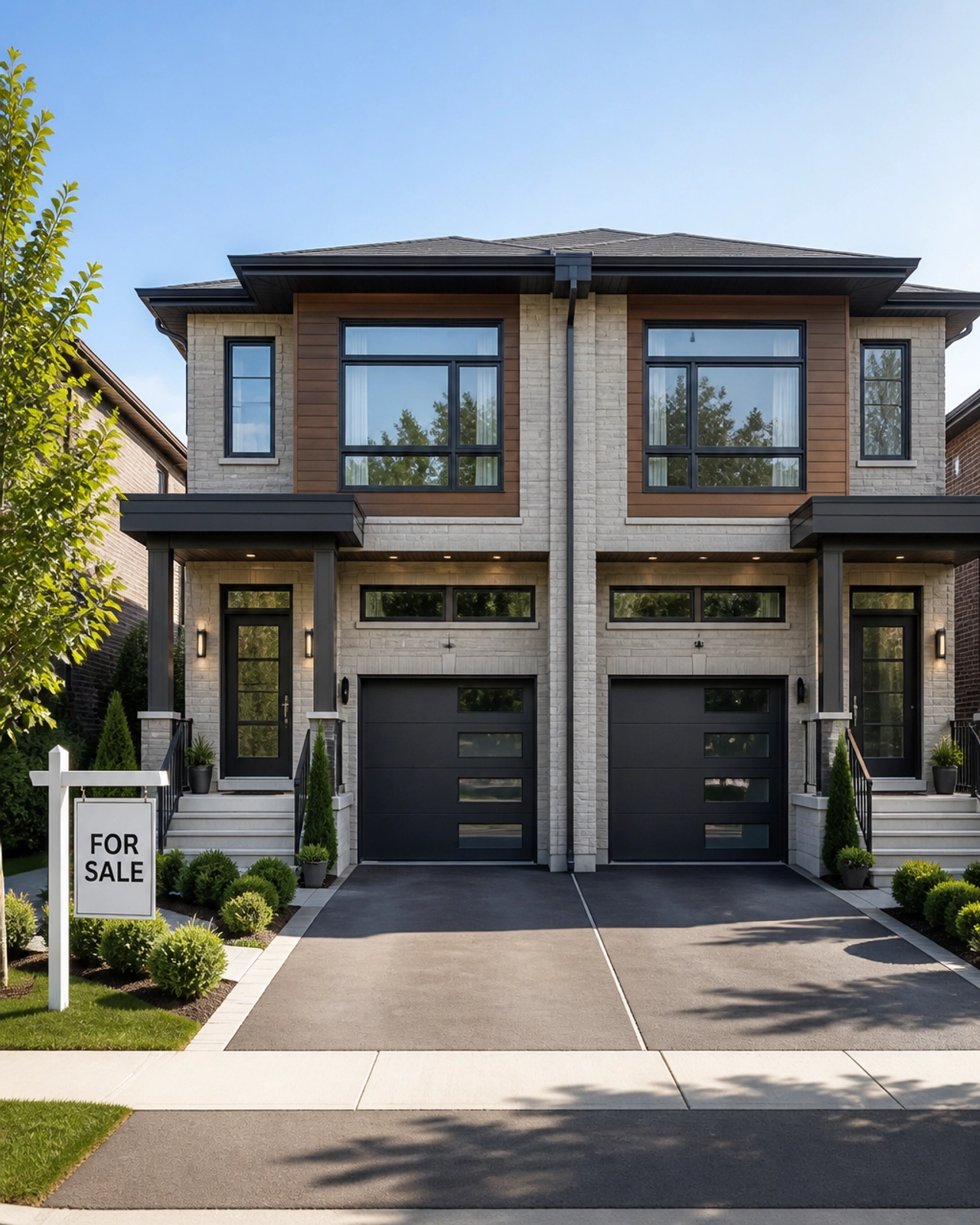
In Mississauga, investors are often able to secure a semi-detached home for the price of a mid-range Toronto condo. As of May 2026, the average price for a semi-detached in Mississauga sits at $931,437. For families, this represents a lifestyle upgrade; for investors, it represents a more versatile asset that can be leased to long-term, stable families rather than transient urban professionals.
Comparing the Metrics: Toronto vs. Mississauga
When deciding where to deploy capital, the following metrics from Q2 2026 are vital:
| Metric (Avg) | Toronto (GTA Core) | Mississauga |
|---|---|---|
| Average Price | $1,020,000 | $971,047 |
| Year-over-Year Change | -6.9% | -6.7% |
| Rental Yield (Condo) | 3.8% – 4.2% | 4.1% – 4.5% |
| Inventory (Months of Supply) | 3.5 Months | 2.8 Months |
| Days on Market | 24 Days | 21 Days |
The data suggests that Mississauga is currently a "tighter" market. With lower months of supply and fewer days on market, the demand-to-supply ratio in Mississauga is slightly more favourable for sellers and landlords than in the Toronto core. This is largely due to the "middle-market" price point attracting a broader demographic of buyers who are priced out of Toronto but still require proximity to the city.
Strategic Investing and Regulatory Compliance
In 2026, the Trust in Real Estate Services Act (TRESA) regulations are more important than ever. Buyers and sellers must ensure they are working with a brokerage that prioritizes transparency and ethical standards. Cathy Dou, Broker of Record at BuyRealty.ca Brokerage, ensures that every transaction is overseen with meticulous attention to the Agreement of Purchase and Sale and all mandatory disclosures.
For those entering the market for the first time, navigating these complexities is paramount. Our Ontario First-Time Home Buyer 101 guide provides a structured path to homeownership in this calibrated market.

The Verdict: Which Is Better for Your 2026 Investment?
The answer depends entirely on your investment horizon and risk tolerance.
Choose Toronto If:
- You are looking for a 10-to-20-year hold.
- You prioritize the prestige and global liquidity of a Tier-1 city.
- You are targeting the high-end luxury market or specific historic neighbourhoods like North York or Vaughan.
- You want to capitalize on the current condo price correction for a long-term turnaround.
Choose Mississauga If:
- You require better immediate cash flow and rental yields.
- You prefer a "middle-market" asset that appeals to the largest segment of the Ontario population.
- You want to leverage the massive infrastructure investments like the LRT.
- You are looking for a semi-detached or detached asset at a more accessible entry point.
Regardless of your choice, the 2026 market is not one for "speculative flipping." It is a market for the Authoritative Advisor: someone who understands that real estate is a game of fundamentals, not just feelings. Beyond these two cities, exploring GTA investment secrets can often reveal opportunities in adjacent hubs like Markham or Richmond Hill that complement a Toronto or Mississauga portfolio.
Navigating the 2026 Market with BuyRealty.ca Brokerage
At BuyRealty.ca Brokerage, we pride ourselves on providing a catered lifestyle approach to real estate. Whether you are downsizing from a multi-generational home in Mississauga or upsizing to a luxury residence in Toronto, our team is equipped with the latest market trends, provincial forms, and legislative knowledge.
Cathy Dou, Broker of Record, brings her personal experience in high-stakes negotiation to ensure that your financial assets are protected and your investment decisions are profitable. In a market where clarity is the greatest asset, we provide the strategic path to your next home.
Call Cathy at 647-691-6364.
| Toronto | Detached houses · Condos · Townhouses · New this week |
|---|---|
| Mississauga | Detached houses · Condos · Townhouses · New this week |

