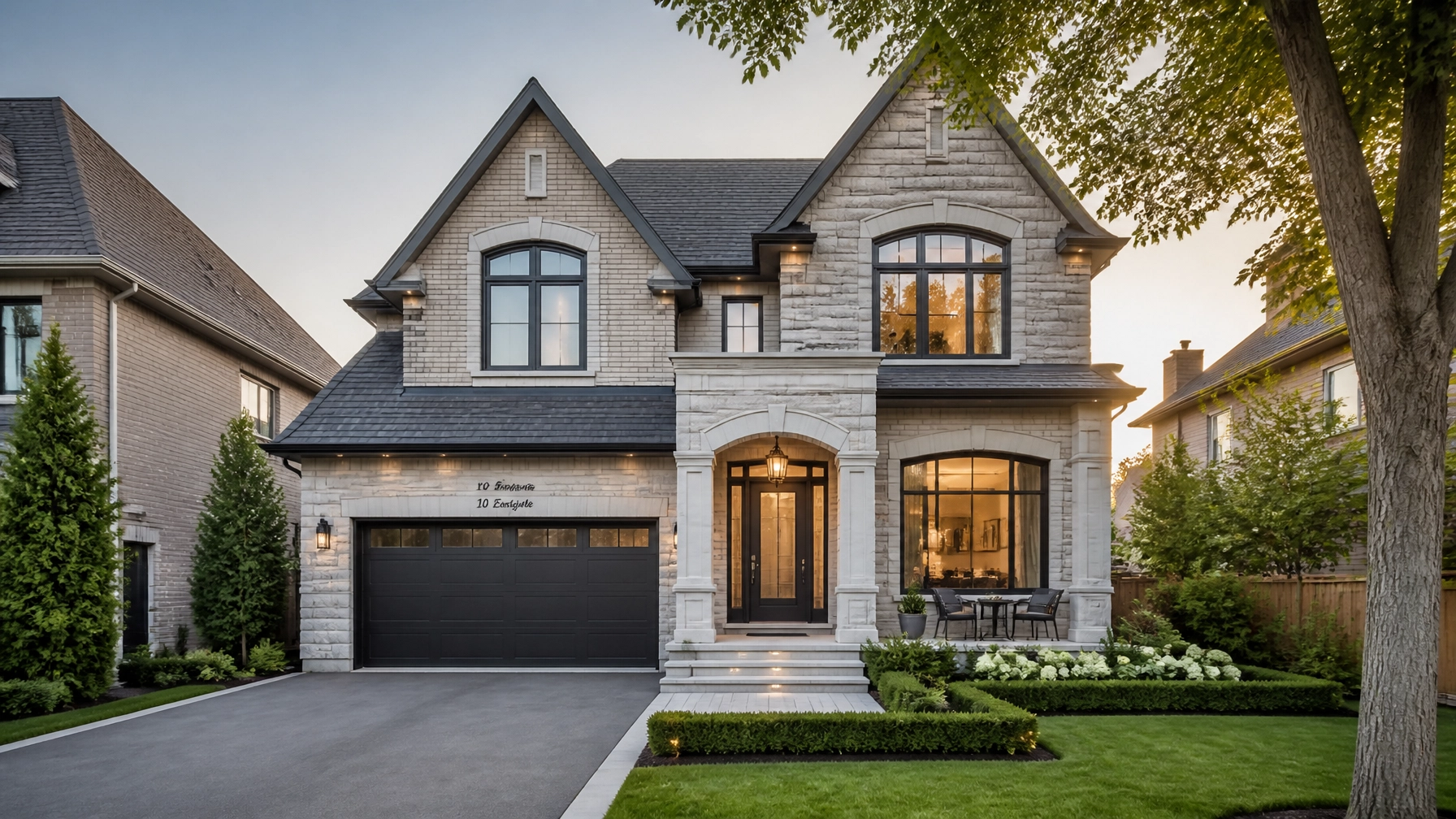
Navigating the Ontario real estate landscape can feel like a daunting task, especially when you are standing on the threshold of your first major purchase. However, the journey to homeownership in the Greater Toronto Area (GTA) and surrounding regions: from the vibrant streets of North York to the peaceful family enclaves of Aurora and Newmarket: is more than just a financial transaction. It is about securing your future in a stable, flourishing community.
Cathy Dou, Broker of Record at BuyRealty.ca, advises clients that success in today's market requires a blend of sharp financial strategy and a deep understanding of local lifestyle nuances. As of June 2026, the market is showing a unique set of characteristics: sales volume is up approximately 6.3% compared to last year, yet new listings have dropped significantly. This tightening of inventory means that while prices have seen a modest year-over-year decline of 4.6%, the competition for high-quality, move-in-ready homes remains robust.
If you are a first-time buyer looking to plant roots in Ontario, here is your five-step guide to navigating the process with confidence and mastering the local lifestyle.
Step 1: Financial Fortification and the Mortgage Landscape
Before you ever step foot inside a Saturday morning open house in Richmond Hill or Vaughan, you must have your financial "house" in order. In Ontario, the mortgage environment of June 2026 offers interesting opportunities for those who are prepared.
Currently, the Bank of Canada overnight rate sits at 2.25%, a level that has remained stable since late 2025. For a first-time buyer, this translates to discounted 5-year fixed mortgage rates hovering in the mid-4% range (typically between 4.6% and 4.9%). If you are considering a variable-rate mortgage, you might find offers in the low-to-mid 3% range.
The Pro-Tip: Don't just look at the interest rate. Consider the "stress test" and your total debt service ratios. Cathy Dou, Broker of Record, emphasizes that being pre-approved is your greatest negotiation tool. In a market where inventory is down nearly 19% year-over-year, sellers are prioritising offers that come with firm financial backing.
Remember to account for closing costs, which in Ontario include the Land Transfer Tax (LTT). If you are buying in Toronto, you will face both Provincial and Municipal Land Transfer Taxes, though first-time buyers often qualify for significant rebates. Understanding these Ontario first-time home buyer secrets is essential for accurate budgeting.

Step 2: Define Your Lifestyle and Target Your Neighbourhood
Ontario is a massive province with incredibly diverse micro-markets. Mastering the local lifestyle means choosing a community that aligns with your daily needs and long-term goals.
- The Urban Professional: If you crave walkability and a 15-minute city lifestyle, areas like North York or specific pockets of Toronto are ideal. You might want to explore why Willowdale’s walkability makes it a top choice for those who want to minimize their commute.
- The Growing Family: For those seeking more square footage and top-tier schools, Richmond Hill, Markham, and Vaughan offer established communities with stable property values. These areas have shown remarkable resilience even during market corrections.
- The Commuter’s Haven: Aurora, Newmarket, and East Gwillimbury provide a perfect balance of modern amenities and slightly more competitive price points than the immediate 416 area code.
- The Up-and-Coming Markets: If you are looking for more "house for your dollar," looking slightly further north to Innisfil or Bradford can be a strategic move, especially as transit infrastructure continues to expand.
When selecting a neighbourhood, look beyond the house. Evaluate the local community centres, park systems, and regional development plans. A stable community is the best protection for your investment.
Step 3: Navigating the Search in a Tightening Market
With TRREB (Toronto Regional Real Estate Board) data showing a sharp 18.9% decrease in new listings, the "search" phase has become more of a "strategy" phase. You are no longer just looking for a house; you are looking for an opportunity.
Cathy Dou, Broker of Record at BuyRealty.ca Brokerage, utilizes deep market analytics to identify properties before they hit peak competition. This is where professional guidance becomes invaluable. A "turnkey" investment in Thornhill or a diamond-in-the-rough in North York requires different tactical approaches.
During your search, keep a keen eye on "Latent Defects" and the general condition of the property. In a market that is tightening, it is tempting to skip inspections to make an offer more attractive. However, BuyRealty.ca Brokerage always advises maintaining a level of due diligence to protect your financial future.
Step 4: Mastering the Offer and TRESA Regulations
When you find "the one," the negotiation begins. In Ontario, the Trust in Real Estate Services Act (TRESA) governs how real estate professionals interact with clients and the public. It is designed to provide transparency and clarity, ensuring you are fully informed throughout the transaction.
Your Agreement of Purchase and Sale is a legal contract that dictates the terms of your future homeownership. In the current June 2026 market, where sales are up but prices are slightly softer, there is often room for strategic negotiation.
Cathy Dou’s Negotiation Strategy:
- Transparency: Ensure all disclosures are met.
- Strategic Conditions: While "clean" offers are popular, ensuring conditions for financing and inspection are handled professionally can mitigate risk.
- Local Context: Understanding recent sales in your specific pocket of Markham or Newmarket allows you to bid with precision, not emotion.
The goal is to navigate the "complex regulatory environment with absolute integrity," ensuring that your path to homeownership is both protected and strategic. For more on the current outlook, you can read our GTA real estate investment guide.
Step 5: Closing and Transitioning into the Ontario Lifestyle
Once your offer is accepted, the "closing period" begins: usually 30 to 90 days. This is when your lawyer handles the title transfer, you finalize your mortgage with your lender (confirming those mid-4% rates), and you prepare for the physical move.
Mastering the local lifestyle doesn't end when you get the keys. It begins there. Integrating into your new Ontario community involves:
- Updating your address with provincial services.
- Connecting with local business improvement areas (BIAs).
- Understanding the specific zoning or heritage bylaws of your new neighbourhood, especially in older parts of Richmond Hill or Toronto.
Cathy Dou and the team at BuyRealty.ca Brokerage don't just stop at the transaction. We offer a "catered lifestyle approach," helping you understand the intricacies of your new home long after the moving trucks have left. Whether you are renting vs buying in Ontario or settling into your first freehold property, the transition should be seamless.

Conclusion: Your Strategic Path Forward
Buying a home in Ontario in 2026 is an exercise in patience, precision, and professional partnership. With the market tightening and interest rates stabilizing, the "wait and see" approach is being replaced by "plan and act." By following these five steps: securing your finances, defining your lifestyle, searching strategically, negotiating with integrity under TRESA, and closing with confidence: you can turn the daunting process of your first home purchase into a rewarding milestone.
Real estate in Ontario isn't just about the transaction; it’s about navigating a complex regulatory environment with absolute integrity. Cathy Dou, Broker of Record at BuyRealty.ca Brokerage, advises clients to approach this journey through both quantitative metrics and qualitative community factors.
Ready to start your journey in Toronto, Vaughan, or the surrounding GTA?
Call Cathy at 647-691-6364
{“name”:”How to Buy a House in Ontario and Master the Local Lifestyle”,”step”:[{“name”:”Financial Fortification”,”text”:”Get pre-approved for a mortgage. In June 2026, 5-year fixed rates are around 4.6-4.9%. Account for closing costs like Land Transfer Tax.”,”@type”:”HowToStep”},{“name”:”Define Your Lifestyle”,”text”:”Choose a neighbourhood that fits your lifestyle, whether it’s the walkability of North York or the family-friendly streets of Richmond Hill.”,”@type”:”HowToStep”},{“name”:”Strategic Home Search”,”text”:”Navigate the low-inventory market by working with a professional broker to find move-in-ready homes before competition peaks.”,”@type”:”HowToStep”},{“name”:”Master the Offer”,”text”:”Submit a strategic offer compliant with TRESA regulations. Negotiate terms that protect your financial interests.”,”@type”:”HowToStep”},{“name”:”Closing and Integration”,”text”:”Finalize legal and financial documents, handle the title transfer, and transition into your new local community.”,”@type”:”HowToStep”}],”@type”:”HowTo”,”image”:”https://cathydou.com/wp-content/uploads/sites/3/2026/08/mbimg/Ld_LgudwMG3.webp”,”@context”:”https://schema.org”,”publisher”:{“logo”:{“url”:”https://cathydou.com/wp-content/uploads/sites/3/2026/08/mbimg/5CuLVcRGfUI.png”,”@type”:”ImageObject”},”name”:”BuyRealty.ca Brokerage”,”@type”:”Organization”},”totalTime”:”P3M”,”description”:”A comprehensive 5-step guide for first-time home buyers in Ontario, focusing on financial planning, neighbourhood selection, and market trends for June 2026.”,”estimatedCost”:


Leave a Reply
Join the conversationComments are open to registered clients. Create your free account and you can reply to Cathy Dou right here.It takes a minute, and it brings you straight back to this page.