
As we move through the second quarter of 2026, the question on many lips in the Greater Toronto Area (GTA) and beyond is: "Is the market bad?" For the astute investor, particularly those in the Chinese community who view real estate as a multi-generational asset, the word "bad" is often a misnomer for "recalibrated."
The frenzy of the early 2020s has been replaced by a more disciplined, strategic environment. In Ontario, navigating this landscape requires more than just capital; it requires an understanding of new regulatory frameworks like the Trust in Real Estate Services Act (TRESA) and a deep dive into the micro-markets of Toronto, Markham, Richmond Hill, and beyond. Cathy Dou, Broker of Record at BuyRealty.ca Brokerage, advises clients to approach this comparison through both quantitative metrics and qualitative community factors.
The Big Picture: Ontario’s 2026 Stability
The Ontario real estate market in May 2026 is defined by a "cautious recovery." According to recent data from the Toronto Regional Real Estate Board (TRREB), the average sold price in the GTA for April 2026 sat at $1,051,969. While this represents a 3.4% increase month-over-month from March, it remains approximately 5.0% lower year-over-year compared to 2025.
For Chinese investors, this data signals a "window of opportunity" rather than a "market crash." The peak prices of 2022 are still a distant memory, and many analysts suggest we may not see those heights again until 2029 or 2030. However, the current stabilization offers a predictable entry point that was non-existent during the high-volatility years.

Understanding the "Bad" Market Myth
Is the market bad? If your goal is a "quick flip," then yes, the 2026 market is challenging. Transaction volumes remain below long-term norms, with TRREB forecasting between 60,000 and 70,000 transactions for the full year. However, if your investment logic is built on long-term rental yields and asset protection, the market is actually quite healthy.
The current inventory levels, particularly in the condominium sector where prices have cooled to an average of $636,000, give buyers significant negotiating power. In a market where supply was once so tight that "blind bidding" was the norm, investors can now perform due diligence, conduct home inspections, and negotiate terms, luxuries that were lost for nearly a decade.
The Looming Supply Crunch
One critical factor that savvy investors are watching is the rate of new housing starts. In Ontario, housing starts have fallen to near two-decade lows in 2026. This is largely due to the weak pre-construction sales seen in 2024 and 2025. While this feels like "bad" news for the economy now, it creates a massive supply-demand imbalance for 2028-2030. Buying finished inventory today means owning assets that will be in high demand when the construction pipeline dries up in a few years.
Local Nuance: Where the Money is Moving
Investment logic in the Chinese community often gravitates toward specific "prestige" pockets. Understanding the differences between these areas is essential for a profitable portfolio.
Richmond Hill and Markham: The Traditional Strongholds
For many families, the "Golden Horseshoe" investment starts in Richmond Hill and Markham. These areas have shown remarkable resilience. While the GTA-wide detached average is $1.37 million, premium pockets in these neighbourhoods often command more due to the quality of schools and community infrastructure.
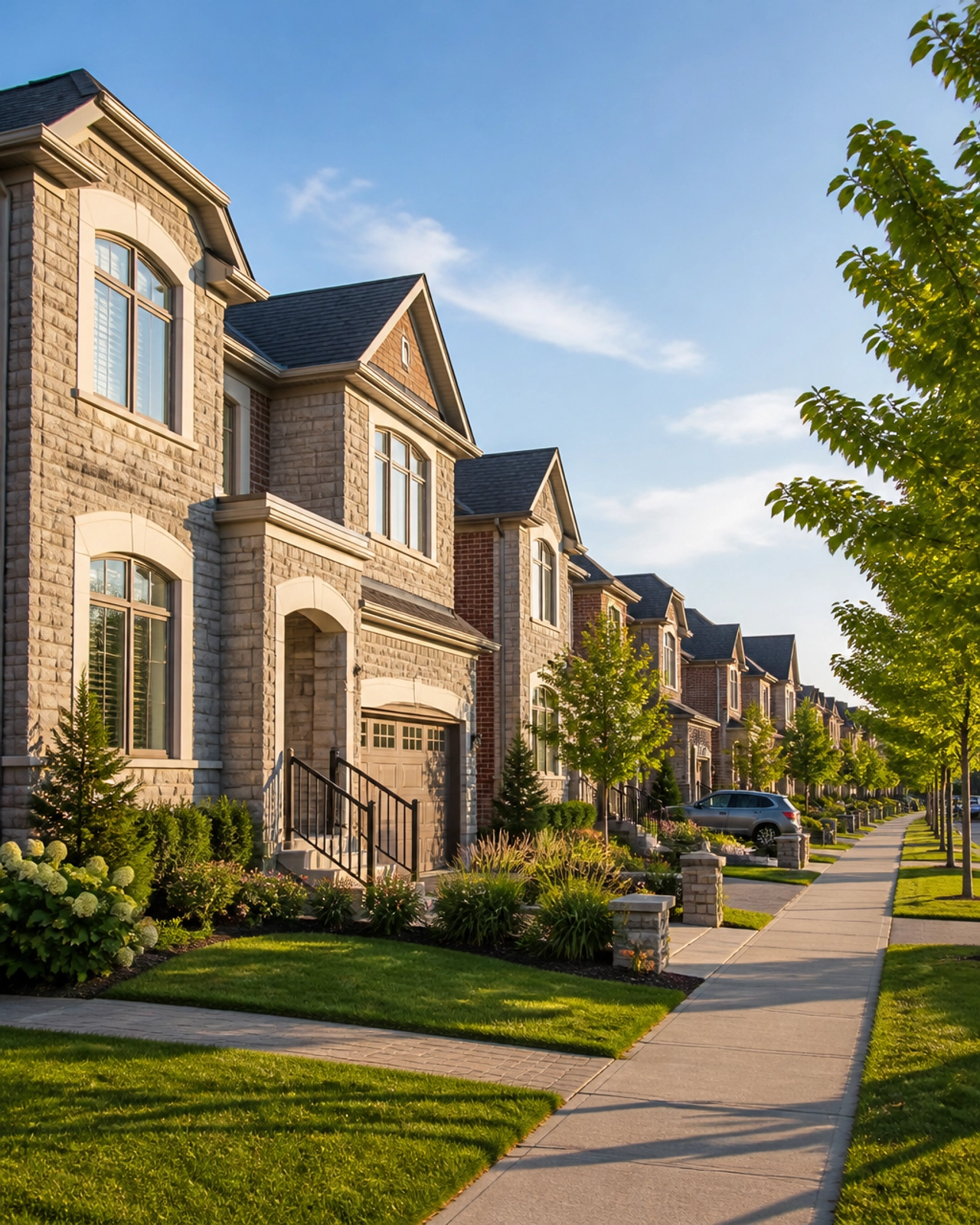
Cathy Dou often points out that these areas are less sensitive to the "condo glut" affecting downtown Toronto. Investors here focus on freehold properties where the land-to-building value ratio is more favourable. For a deeper look at how these forecasts impact your strategy, you can read why the latest Toronto housing market forecast will change the way you invest.
The Urban Core: Toronto and North York
The City of Toronto proper saw an average price of $1,091,761 in April 2026, a 6.7% jump from the previous month. This "spring bounce" suggests that demand for urban living remains high despite higher borrowing costs. North York, in particular, remains a favourite for those seeking a balance between subway access and residential stability.
Mortgage Rates: The "New Normal"
As of late May 2026, the Bank of Canada policy rate remains steady at approximately 2.25%. For investors, this means the era of "free money" (1-2% rates) is over, but the era of "stable money" has begun.
Most 5-year fixed rates are hovering in a range that allows for predictable cash flow modelling. The main stress point in the current market isn't new hikes, but rather the "payment shock" for owners who are renewing mortgages first signed in 2021. This "renewal wall" is actually creating opportunities for investors, as some over-leveraged owners are forced to list their properties, adding much-needed inventory to the market.
To understand how to maximize your returns in this interest rate environment, exploring GTA real estate secrets regarding rental yields is a strategic next step.
Cultural Nuances in Investment Logic
For the Chinese investor, a property is rarely just four walls and a roof. It is a vessel for wealth preservation and family legacy. In 2026, several cultural factors are driving purchase decisions:
- Education Proximity: Proximity to top-ranked Ontario schools (using the Fraser Institute rankings) remains the number one price driver in areas like Unionville and Bayview Hill.
- Multigenerational Layouts: With the rising cost of living, homes that feature "secondary suites" or layouts that accommodate elderly parents are seeing higher demand and faster sales.
- Feng Shui and Orientation: In a "buyer’s market," properties with poor orientation or layout issues (e.g., front door facing a staircase) are sitting longer, while "harmonious" properties are still seeing multiple offers.

The Importance of Professional Governance
In the 2026 landscape, the regulatory environment is stricter than ever. Under TRESA, real estate professionals have enhanced fiduciary duties and disclosure requirements. This is where working with an experienced team becomes a financial safeguard.
Cathy Dou, as Broker of Record at BuyRealty.ca Brokerage, ensures that every transaction is handled with absolute transparency. Whether it's identifying latent defects in a Richmond Hill estate or navigating the complexities of the Foreign Buyer Ban (and its various exemptions), professional oversight mitigates the risks that "bad" market cycles often hide.
Conclusion: Strategy Over Sentiment
Is the 2026 Toronto housing market "bad"? If you are looking for a speculative bubble, yes. But if you are looking for a structured, transparent, and stable environment to grow your wealth, this is one of the best times to buy in recent memory.

The keys to success in May 2026 are:
- Patience: Negotiate hard on properties with high days-on-market.
- Precision: Focus on high-demand neighbourhoods like Markham, Vaughan, and Richmond Hill.
- Compliance: Ensure your agent is fully versed in TRESA and provincial regulations.
Real estate in Ontario is about more than the transaction; it is about navigating a complex environment with integrity. At BuyRealty.ca Brokerage, we provide the strategic path to ensure your investment is protected.
Call Cathy at 647-691-6364


