

The Ontario Market Context: February 2026
Before drilling into the nuances of the Mississauga real estate market, Vaughan real estate market, and Richmond Hill real estate market, it’s essential to understand the broader provincial landscape. Ontario’s residential sector has entered a recalibration phase in early 2026, characterized by moderated pricing, increased inventory levels, and a return to negotiation-based transactions.
The Ontario Real Estate Association reports that the provincial market has shifted from the seller-dominated conditions of 2021–2023 toward a more balanced environment. Interest rate stabilization, coupled with modest population growth and the resumption of housing starts, has created a market where strategic buyers hold substantial leverage: particularly in the Greater Toronto Area’s suburban corridors.
For buyers and investors evaluating opportunities across the 905 belt, understanding regional differentiation is no longer optional. Each municipality presents distinct zoning frameworks, infrastructure timelines, and demographic trajectories that directly impact long-term value appreciation and rental yield potential.

Regional Market Dynamics: The 905 Comparison Framework
When comparing these three York and Peel Region powerhouses, several analytical lenses prove essential: average transaction prices, inventory depth, days on market, municipal development pipelines, and transit accessibility. Cathy Dou, Real Estate Agent and Broker of Record at BuyRealty.ca Brokerage, advises clients to approach this comparison through both quantitative metrics and qualitative community factors.
The current market presents a rare opportunity: all three municipalities are simultaneously experiencing inventory expansion while maintaining relative price stability. This convergence creates optimal conditions for informed buyers who understand the distinct value propositions each region offers.
Vaughan Real Estate Market: Balanced Conditions with Infrastructure Challenges
The Vaughan real estate market has transitioned decisively into balanced-to-buyer’s market territory as of February 2026. Average sold prices currently range between $1.08 million and $1.17 million, representing an approximate 8% year-over-year price correction. This adjustment reflects both provincial trends and localized supply increases.
Market Metrics:
- Detached homes: Averaging approximately $1.4 million
- Condominium apartments: Averaging approximately $540,000
- Average days on market: 37 days
- Sale-to-list price ratio: 97%
- New listings (28-day period): 550+ properties
The return of conditional sales represents a significant shift in negotiating power. Buyers in Vaughan can now routinely include home inspection and financing clauses in their Agreements of Purchase and Sale: a stark contrast to the unconditional bidding wars that defined the 2021–2023 period.
Critical Infrastructure Consideration:
Major construction on Rutherford Road and Highway 400 is creating prolonged gridlock that materially impacts property values in affected corridors. Investment property owners should note that vacancy rates in these zones have increased due to tenant inconvenience. Properties within a 2-kilometre radius of these construction zones are experiencing measurable discount pressure relative to comparable homes in unaffected neighbourhoods.
Despite these challenges, Vaughan’s long-term fundamentals remain robust. The municipality’s diversified employment base, VMC (Vaughan Metropolitan Centre) development, and subway connectivity provide structural support for future appreciation once infrastructure projects reach completion.
Richmond Hill Real Estate Market: New Construction and Demographic Shifts
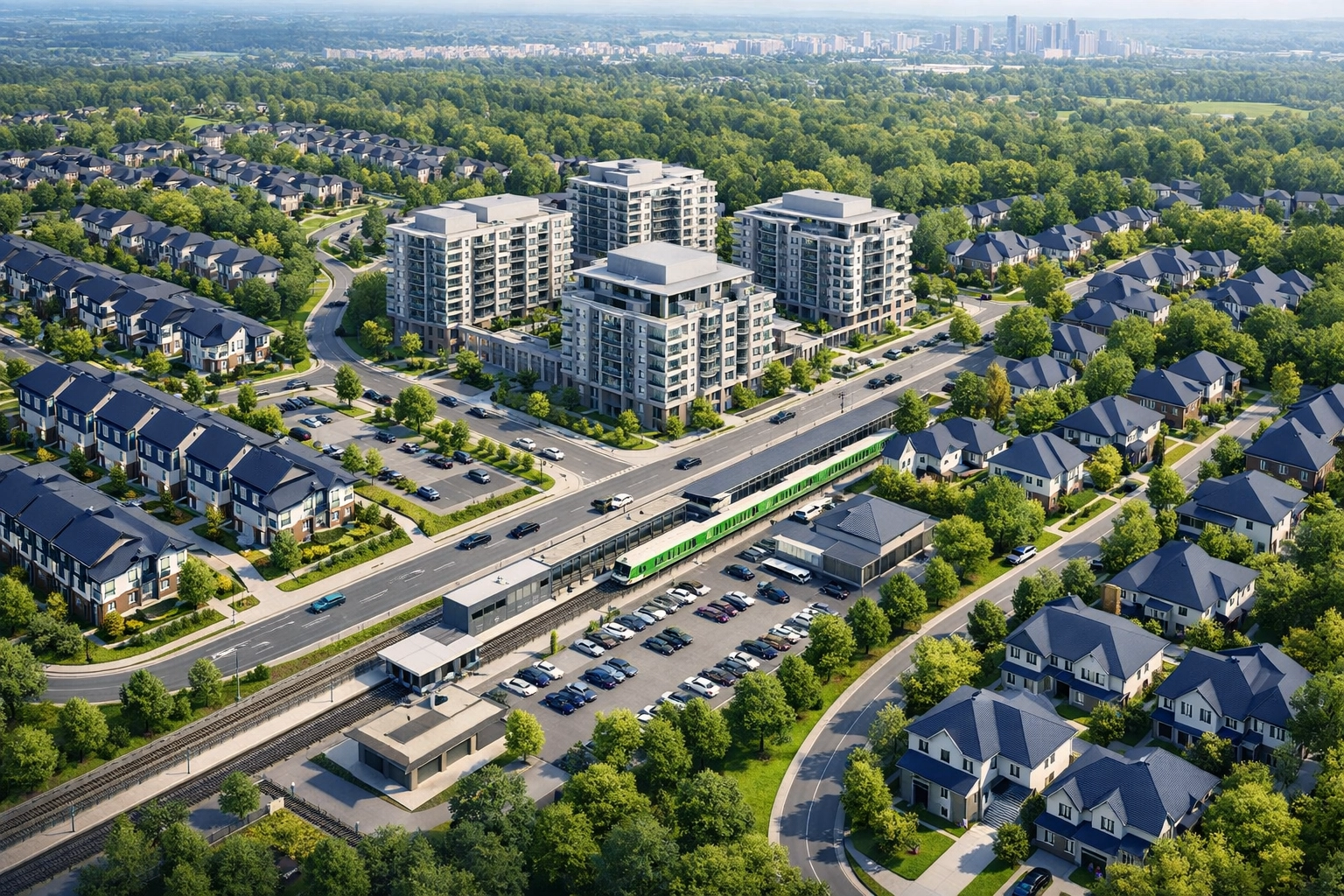
The Richmond Hill real estate market presents a compelling narrative for 2026: the resumption of residential construction after a two-to-four-year development pause. New single-family home projects are advancing toward late Q3 and Q4 completions, creating opportunities for buyers seeking modern, energy-efficient freehold properties with builder warranties.
Pricing Landscape:
- One-bedroom condominiums: Approximately $500,000
- New construction single-family homes: Pricing varies by neighbourhood and lot size, with the Legacy Hill community offering larger-format homes targeting extended family buyers
Richmond Hill’s appeal extends beyond pricing metrics. York Region’s top-ranked school districts, combined with Metrolinx transit access and Highway 404/407 connectivity, create a value proposition that resonates particularly with families and multi-generational households.
Transaction Dynamics:
Conditional sales have become standard practice in Richmond Hill, with transaction timelines frequently extending beyond 30–45 days. This extended closing period accommodates buyers who need additional time to execute their current property sale: a practical adaptation to current market liquidity conditions.
Investment analysis for Richmond Hill should incorporate York Region’s development charge framework and the municipality’s commitment to maintaining employment land designations. These policy decisions create a more stable, less speculative appreciation trajectory compared to purely residential-driven markets.

Mississauga Real Estate Market: Urban Maturity and Intensification Strategy
The Mississauga real estate market operates in Ontario’s third-largest city, with a distinctly urban character that distinguishes it from Vaughan and Richmond Hill. Mississauga’s intensification strategy, centred on major nodes like Port Credit, Mississauga City Centre, and Cooksville, has created a bifurcated market: established low-rise neighbourhoods versus high-density condominium corridors.
Market Characteristics:
- Mature neighbourhood stock with limited new low-rise development
- Extensive condominium inventory in designated growth areas
- Superior transit connectivity via GO Transit and planned Hazel McCallion LRT
- Proximity to Toronto Pearson International Airport and employment clusters
For buyers comparing Mississauga to Vaughan and Richmond Hill, the fundamental trade-off centers on urban amenity density versus suburban space. Mississauga offers walkability, established infrastructure, and shorter commute times to downtown Toronto, while the York Region municipalities provide larger lot sizes and newer housing stock.
Mississauga’s Land Transfer Tax structure mirrors provincial rates without municipal surcharges: a meaningful cost advantage for buyers. This represents thousands of dollars in closing cost savings compared to Toronto purchases, while maintaining comparable transit access and proximity to employment.

Investment Potential Analysis: Risk-Adjusted Return Considerations
When evaluating these three markets through an investment lens, several factors demand rigorous analysis:
Vaughan presents the highest near-term risk due to infrastructure disruption, but offers compelling value for patient investors who can weather 18–24 months of construction. Post-construction properties in affected zones may experience appreciation acceleration as accessibility normalizes.
Richmond Hill offers the most balanced risk-return profile. New construction inventory provides modern housing stock with minimal maintenance capital expenditure requirements for 5–7 years. The municipality’s demographic trajectory: stable, family-oriented, with high employment rates, supports consistent rental demand and moderate appreciation.
Mississauga functions as the stability play. Mature infrastructure, established tenant pools, and diversified economic base create lower volatility but potentially lower appreciation rates. Ideal for investors prioritizing cash flow stability over aggressive capital gains.
Strategic Considerations for 2026 Buyers
Regardless of which municipality aligns with your investment thesis or lifestyle requirements, several universal principles apply in the current market:
- Due Diligence Rigourelevated: The return of conditional periods enables thorough home inspections and comprehensive title searches. Exercise this right systematically.
- Financing Pre-Approval: Mortgage stress testing remains elevated. Secure pre-approval before initiating property searches to understand your true purchasing capacity.
- Professional Representation: Navigating the Agreement of Purchase and Sale, Schedule A negotiations, and disclosure requirements demands experienced guidance. The Trust in Real Estate Services Act (TRESA) establishes clear standards for professional conduct: ensure your representation meets these requirements.
- Long-Term Hold Perspective: Short-term speculation has largely exited the Ontario market. Properties acquired in 2026 should be evaluated on 5–10 year holding period fundamentals: location stability, infrastructure development timelines, and demographic sustainability.
The Path Forward: Informed Decision-Making in a Shifting Market
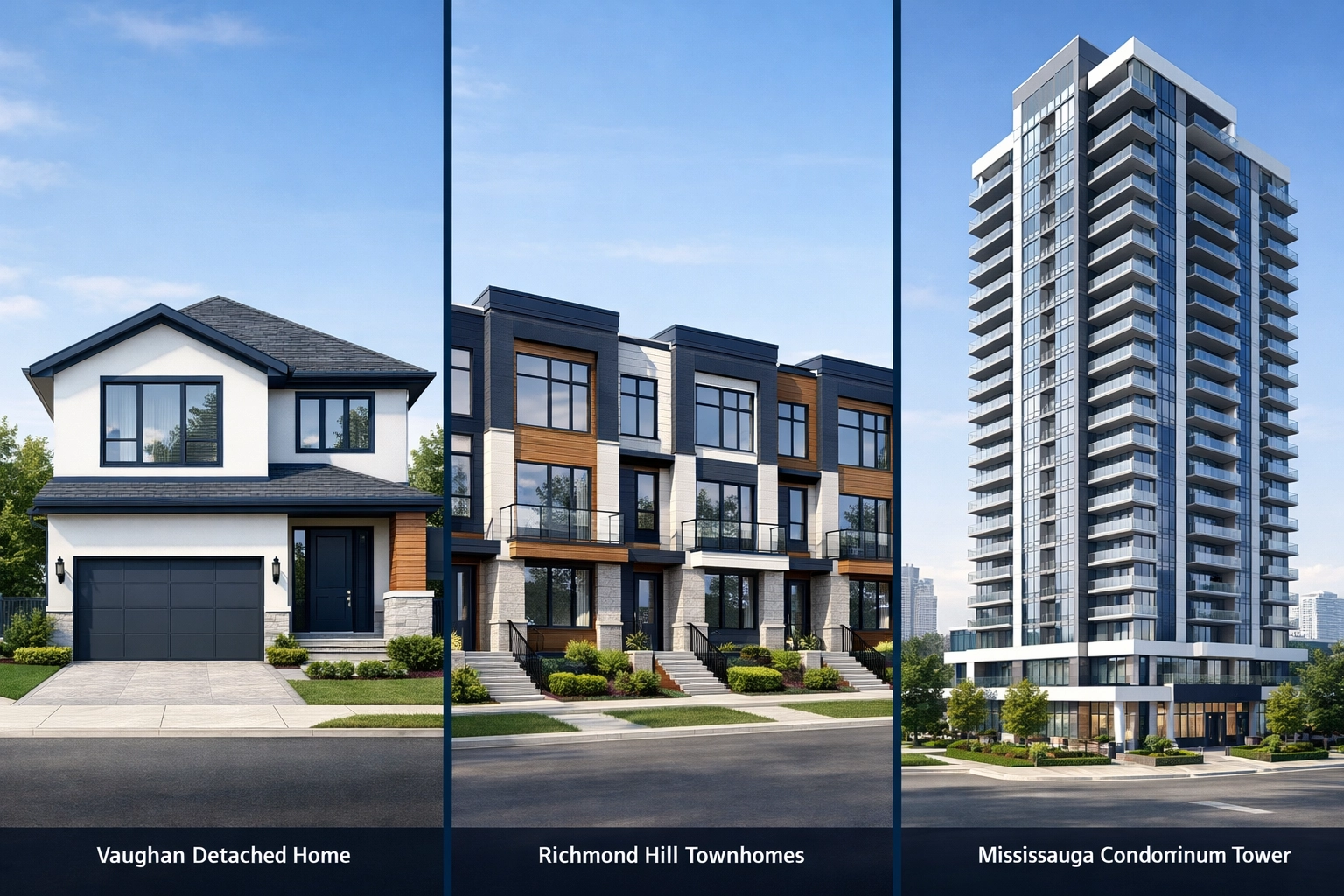
The Mississauga real estate market, Vaughan real estate market, and Richmond Hill real estate market each offer distinct value propositions in February 2026. No single municipality represents the “correct” choice for all buyers: the optimal decision depends on your specific financial capacity, lifestyle priorities, and investment timeline.
What remains constant across all three markets is the importance of working with professionals who understand provincial regulations, municipal planning contexts, and current market mechanics. At BuyRealty.ca Brokerage, our commitment extends beyond transaction facilitation to strategic advisory grounded in fiduciary responsibility and comprehensive market knowledge.
If you’re evaluating opportunities in these municipalities and need detailed neighbourhood-level analysis or assistance structuring your offer strategy, Cathy Dou provides consultations that integrate current market data with long-term planning considerations. In a market defined by complexity, clarity becomes your most valuable asset.
The 2026 Greater Toronto Area real estate landscape rewards patience, preparation, and professional guidance. Whether you ultimately select Mississauga’s urban convenience, Vaughan’s suburban scale, or Richmond Hill’s balanced offering, your decision should rest on comprehensive analysis rather than reactive timing. The market has shifted( ensure your approach shifts with it.)