
So, you’re ready to stop paying your landlord’s mortgage and start building your own equity? Buying your first home in Ontario is a massive milestone, but let’s be real: the process can feel like a maze. Between fluctuating interest rates, new provincial regulations, and the fast-moving markets of the Greater Toronto Area (GTA), there is a lot to navigate.
As of today, Monday, April 20, 2026, the Ontario real estate landscape is showing some unique opportunities. With the Bank of Canada (BOC) overnight rate sitting at 2.25%, and 5-year fixed mortgage rates currently hovering around the 3.94% mark for well-qualified buyers, the entry point is more accessible than it was a couple of years ago.
Cathy Dou, Broker of Record at BuyRealty.ca Brokerage, advises clients that while the numbers are important, having a strategic roadmap is what ultimately wins the keys to a new home. This guide breaks down exactly how to buy a house in Ontario, from your first cent saved to the day you get the call from your lawyer.
Step 1: Navigating the Financials: How Much Down Payment in Ontario?
The most common question from any ontario first time home buyer is: "How much do I actually need?" In Canada, the minimum down payment is determined by the purchase price of the home.
Here is the breakdown of the current rules:
- $500,000 or less: You need 5% of the purchase price.
- $500,001 to $999,999: You need 5% on the first $500k, and 10% on the portion above that.
- $1 million or more: A minimum 20% down payment is required.
For example, if you are looking at a $800,000 townhouse in Newmarket or Aurora, your minimum down payment would be $55,000 ($25,000 for the first $500k + $30,000 for the remaining $300k). If you're eyeing a detached home in Richmond Hill or Markham that crosses the $1 million mark, you'll need at least $200,000 ready to go.
Utilizing Government Incentives
The federal and provincial governments offer several programs to help you bridge the gap.
- First Home Savings Account (FHSA): A "best of both worlds" account that allows you to contribute up to $8,000 per year (to a $40,000 lifetime limit). Contributions are tax-deductible, and withdrawals are tax-free when used for a home purchase.
- Home Buyers’ Plan (HBP): You can withdraw up to $35,000 from your RRSPs tax-free, provided it is paid back over 15 years.
- Land Transfer Tax Refund: In Ontario, first-time buyers can receive a refund of up to $4,000 on the provincial land transfer tax. If you are buying in Toronto proper, there is an additional municipal refund available.

Step 2: Get a Real Pre-Approval
Before you start scrolling through listings in North York or Vaughan, you need a mortgage pre-approval. This isn’t just an online calculator; it’s a formal commitment from a lender based on your credit score, income, and debt-to-income ratio.
With the current BOC rate at 2.25%, variable rates are sitting around 3.45%. Having a pre-approval locks in your rate for 90 to 120 days, protecting you from potential hikes while you shop. More importantly, it tells sellers you are a serious, qualified buyer: which is vital in competitive areas like Markham or Unionville.
Step 3: Partner with the Right Professional
The how to buy a house in ontario journey is much smoother when you have an expert in your corner. In Ontario, the Trust in Real Estate Services Act (TRESA) governs how agents interact with clients, ensuring high standards of transparency and ethics.
Cathy Dou, Broker of Record, emphasizes that a buyer’s representative does more than just open doors. They provide historical price data, neighborhood-specific zoning insights, and heavy-duty negotiation skills. At BuyRealty.ca Brokerage, the focus is on fiduciary duty: putting the client’s financial protection first.
Step 4: The Hunt: Targeting Your Neighbourhood
Ontario is a massive province, but for most buyers, the focus remains on the Greater Toronto Area and surrounding regions. Where you buy depends on your lifestyle and long-term goals.
- For Urban Professionals: North York and Toronto offer high walkability and proximity to the subway.
- For Families: Places like Richmond Hill, Markham, and Aurora are renowned for top-tier schools and community centres.
- For Value Seekers: Innisfil, Bradford, and parts of Newmarket offer more square footage and larger lots for your dollar compared to the core.
When touring homes, look past the staging. Check the age of the roof, the furnace, and the windows. In a "friendly" market like we are seeing in April 2026, you often have the luxury of a second viewing, so don't rush.
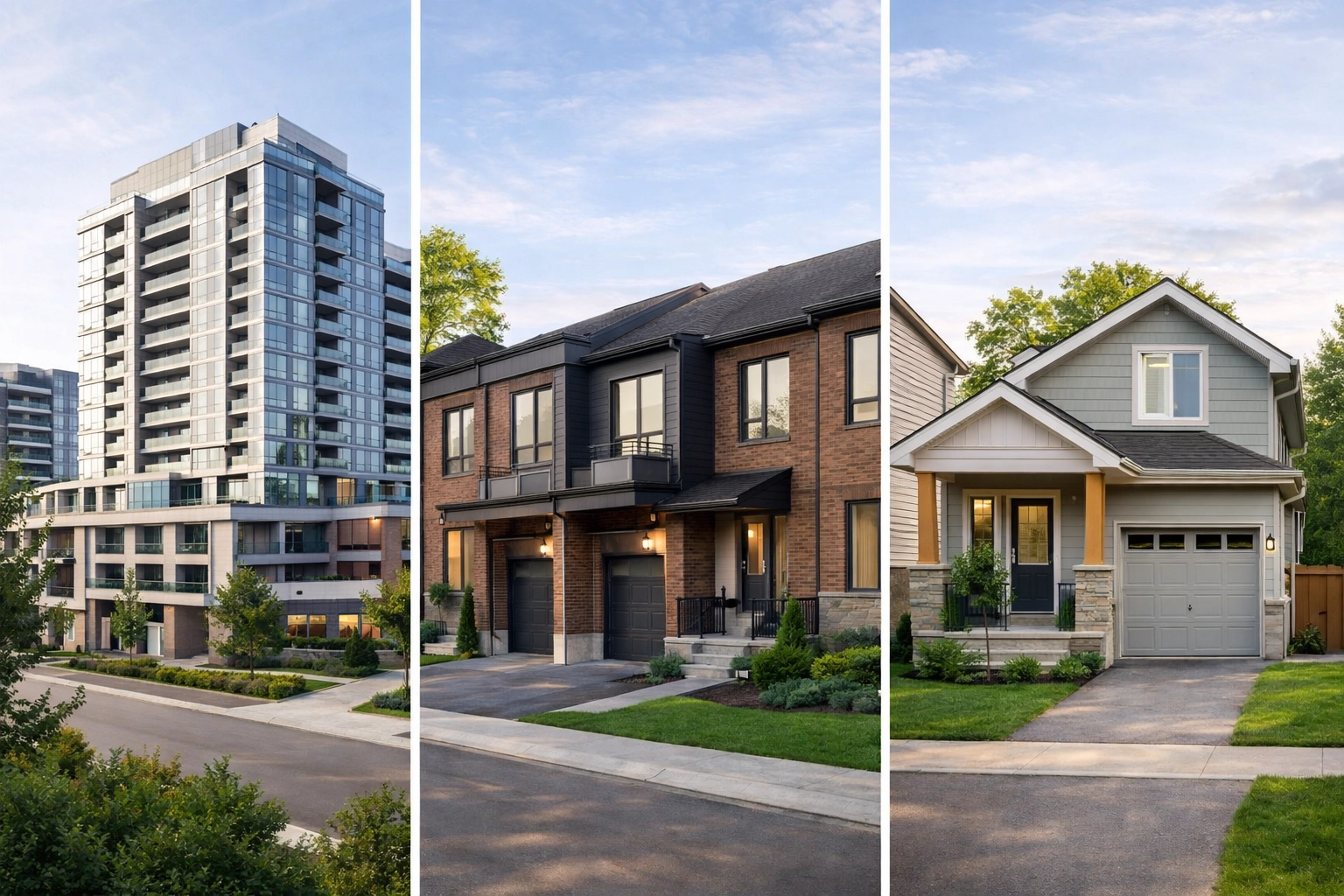
Caption: A visual guide to the diverse housing styles across the GTA, from modern North York condos to spacious Markham detached homes.
Step 5: Making the Offer (The APS)
When you find "the one," your agent will prepare an Agreement of Purchase and Sale (APS). This is a legally binding document that outlines:
- Purchase Price: What you are willing to pay.
- Deposit: Usually 5% of the purchase price, held in trust by the listing brokerage.
- Conditions: The most common are financing, home inspection, and (for condos) a Status Certificate review.
- Closing Date: Usually 30, 60, or 90 days from the offer date.
In a balanced market, conditions are your best friend. They allow you to back out of the deal if the inspection reveals a major defect or if the bank's appraisal doesn't match the purchase price.
Step 6: The Closing Process
Once your offer is accepted and conditions are waived, the "sold" sign goes up! But you aren't a homeowner just yet. Between the "firm" offer and the closing date, several things happen:
- Legal Review: Your lawyer will conduct a title search to ensure there are no liens on the property.
- Insurance: You must secure home insurance before the bank will release the mortgage funds.
- The Big Payment: A few days before closing, you’ll meet your lawyer to sign the final paperwork and provide the remaining down payment and closing costs via bank draft.
A Note on Closing Costs
Don’t forget to budget an extra 1.5% to 4% of the purchase price for closing costs. This includes legal fees, title insurance, and that pesky Land Transfer Tax. For more details on budgeting, you can check out resources on CathyDou.com regarding first-time buyer expenses.

Final Advice for Ontario Buyers
Buying your first home is as much an emotional journey as it is a financial one. The April 2026 market is offering a "sweet spot" of stable rates and decent inventory, but the best time to buy is always when you are financially ready and have a long-term plan.
Whether you are looking for a turnkey investment in Thornhill or a starter home in Bradford, the team at BuyRealty.ca Brokerage is here to guide you through every regulatory hurdle and negotiation.
If you are ready to start your search or just want to chat about your options in the current market, let’s get to work.
Call Cathy at 647-691-6364

